
TL;DR
The best MCP servers are maintained Model Context Protocol servers that give an AI agent the tools and data its job needs, with access you can scope and audit. Developers should start with GitHub, Context7 and Playwright, while data teams should use the managed server from Snowflake, Databricks or Microsoft Fabric. Business teams get the most from Atlassian, Slack, Notion and HubSpot, and research agents need Brave Search, Exa or Firecrawl. Pick servers the vendor maintains, because the old reference servers for GitHub, PostgreSQL and Slack are now archived. Connect each server read-only first, then approve write tools one at a time. Keep the count small, since every connected tool adds definitions the model reads before it starts work.
Key Takeaways
- The strongest 2026 shortlists are grouped by the job the agent does, rather than by star counts or the length of a directory list.
- Vendor-maintained servers from GitHub, Snowflake, Databricks, Atlassian and Slack beat the archived reference servers that many lists still recommend.
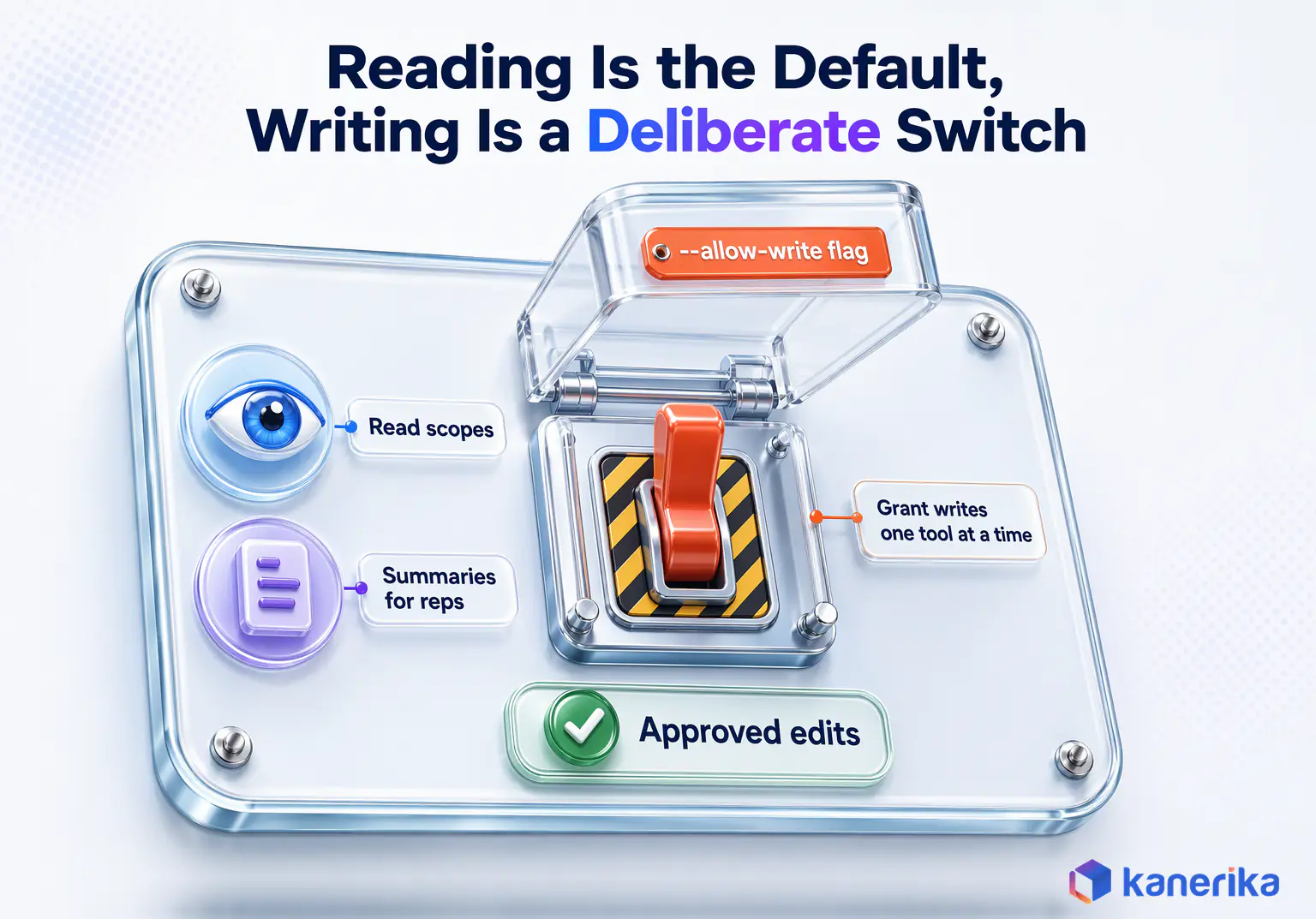
- Most strong servers ship a read-only switch, such as GitHub’s –read-only flag or Linear’s /mcp/readonly endpoint, so turn it on first.
- Snowflake, Databricks and Microsoft now publish their own MCP servers, which respect the roles and catalog grants you already set.
- Every extra server costs context, and Claude Code warns when one tool’s output passes 10,000 tokens.
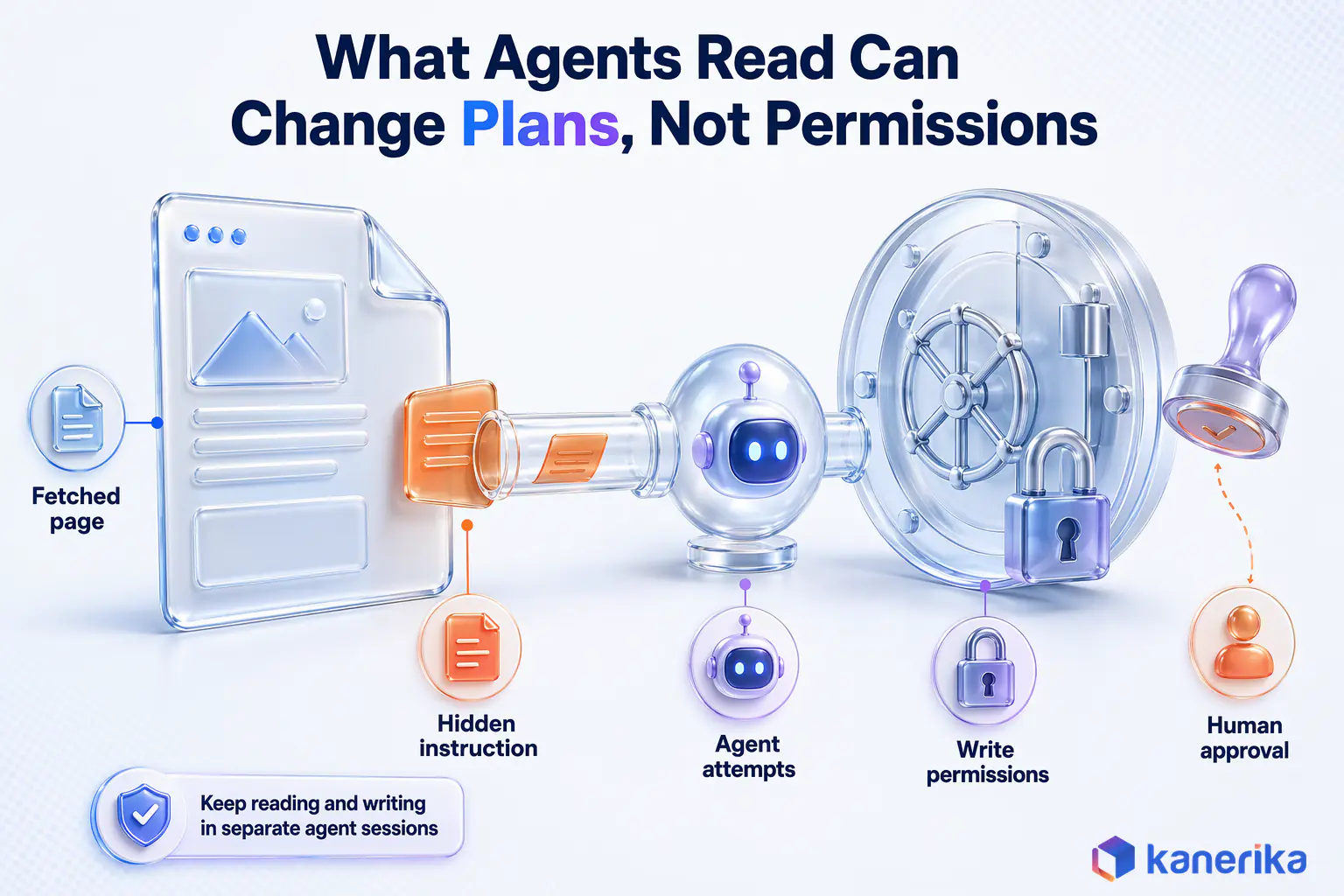
- Treat the web pages, tickets and issues an agent reads as untrusted input, because they can carry hidden instructions.
The Quick Answer Before the Full List
The Linux Foundation counted more than 10,000 published MCP servers in December 2025, and several names in older roundups are archived reference code. A useful answer has to be narrower than any directory. A coding agent gets the most from GitHub, Context7 and Playwright. An analytics agent does best with the managed server its data platform already runs, because that server inherits the roles and grants your data team already keeps.
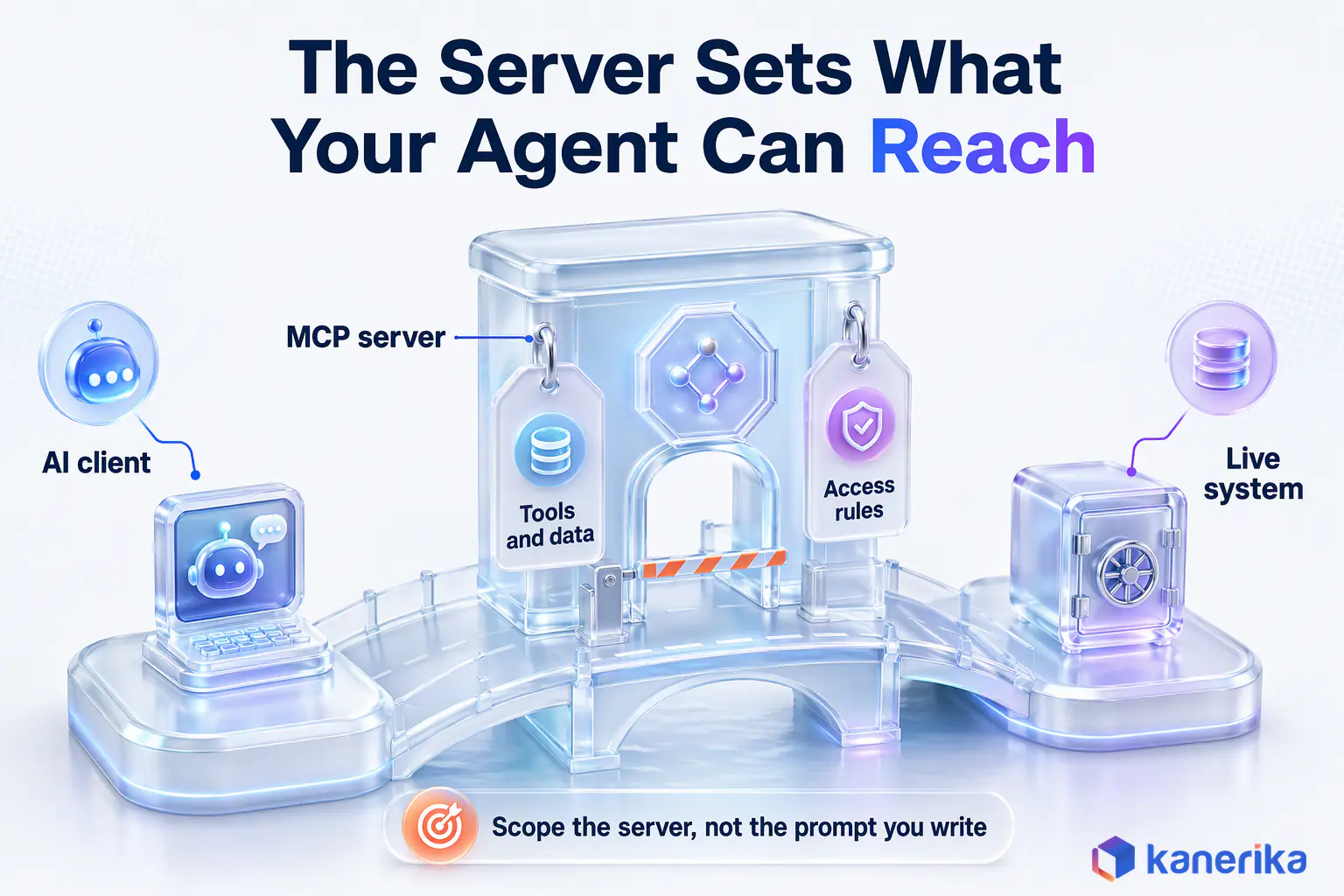
Each server you connect is also a new path into a live system. So the better question is which server does the job with the least access. The 20 best MCP servers for 2026 below are grouped by the job they do, with the least-access option named for each.
What Is an MCP Server?
An MCP server is a small program that exposes tools, data and prompt templates to an AI application through the Model Context Protocol. The MCP specification calls those features Tools, Resources and Prompts. Every message uses JSON-RPC 2.0 as its format, and the AI application, such as Claude Code, Cursor or ChatGPT, decides when to call a tool.
In practice, servers run in one of two ways. A local server talks to the client over stdio on your own machine. A remote server, by contrast, listens on a single HTTPS endpoint through the Streamable HTTP transport. So a whole team can share it once sign-in is set up.
Anthropic open-sourced the protocol on November 25, 2024. Then, in December 2025, the Linux Foundation placed it in its new Agentic AI Foundation. The latest revision, dated July 28, 2026, made MCP stateless by removing sessions and the initialize handshake, so older servers may need an update.
For the architecture itself, read Kanerika’s guide to the Model Context Protocol. The MCP vs A2A comparison also explains where agent-to-agent traffic fits.
Best MCP Servers at a Glance
All 20 servers below are grouped by the job they do. The last column is the one most roundups skip, because it names the switch that keeps an agent reading before you trust it to write.
Data and Development Servers
Table 1: Best MCP Servers for Data and Development
| Server | Best for | Hosting and sign-in | Read-only or scope control |
|---|---|---|---|
| 1. Snowflake-managed MCP server | Governed SQL and Cortex search on Snowflake data | Managed in your account; Snowflake OAuth or External OAuth | Role-based access on the server and each tool |
| 2. Databricks managed MCP servers | Genie answers and SQL under Unity Catalog | Managed in the system.ai schema; caller’s identity | Unity Catalog grants per server |
| 3. Microsoft Fabric MCP and Power BI Authoring MCP | Fabric API context and semantic model edits | Local Fabric server; local or remote Power BI server | Fabric MCP works without touching live environments |
| 4. dbt MCP (dbt Labs) | Metrics, lineage and SQL from a dbt project | Local, plus dbt Platform tools | Leave out the dbt CLI tools, since they can change models |
| 5. Supabase MCP | Postgres projects and app back ends | Hosted at mcp.supabase.com; browser sign-in | read_only mode plus one project_ref |
| 6. GitHub MCP Server | Repos, issues, pull requests and Actions | Remote or local; OAuth or personal access token | –read-only, toolsets allow-list and lockdown mode |
| 7. Context7 (Upstash) | Current, version-specific library docs | Remote; free API key recommended | Returns documentation only |
| 8. Playwright MCP (Microsoft) | Browser testing and automation | Local, Node.js 20 or newer | Point it at test sites before production |
| 9. Sentry MCP | Debugging errors and traces | Remote at mcp.sentry.dev; OAuth | Sees only what your Sentry account sees |
Team, Business, Web and Cloud Servers
Table 2: Best MCP Servers for Teams, Sales, Web Research and Cloud
| Server | Best for | Hosting and sign-in | Read-only or scope control |
|---|---|---|---|
| 10. Atlassian MCP server | Jira and Confluence search and updates | Remote; OAuth 2.1 or API token | Acts with the user’s existing permissions |
| 11. Notion MCP | Workspace search, pages and databases | Remote at mcp.notion.com; Notion sign-in | Admin controls for MCP clients |
| 12. Slack MCP server | Message search, posts and canvases | Remote at mcp.slack.com; confidential OAuth | Admins approve each client app before use |
| 13. Linear MCP | Issues, projects and cycles | Remote; OAuth 2.1 or API key | /mcp/readonly endpoint or read scope |
| 14. HubSpot MCP server | CRM contacts, deals and engagements | Remote at mcp.hubspot.com; OAuth from a user-level app | Read scopes per CRM object |
| 15. Google Analytics MCP | GA4 reports and funnel reports | Local or remote; Google credentials | analytics.readonly until you add –allow-write |
| 16. Brave Search MCP | Web, news, local and image search | Local (STDIO) or HTTP; BRAVE_API_KEY | Search tools only |
| 17. Exa MCP | Web search and clean page fetch | Remote at mcp.exa.ai; anonymous with rate limits, or OAuth or API key | Two read tools by default |
| 18. Firecrawl MCP | Scraping, crawling and site maps | Remote or self-hosted; API key or keyless tier | Keyless tier exposes 3 tools |
| 19. Amazon’s AWS MCP Server | AWS APIs and AWS documentation | Remote and managed, in preview; IAM | IAM policies and CloudTrail audit logs |
| 20. Azure MCP Server | Azure resources from one server | Local, plus remote Resource Manager and Foundry servers; Microsoft Entra ID | Role assignments of the signed-in identity |
Read both tables by row rather than by rank. A data team and a support team will pick different winners, and both can be right.
How We Picked These MCP Servers
Before a server made this list, it had to pass six checks. Each one has a named maintainer, public documentation and a clear way to sign in. Each also has a switch that narrows what the agent can do, recent maintenance, and a job a real team needs done.
Official, Vendor-Built or Community: Why It Matters
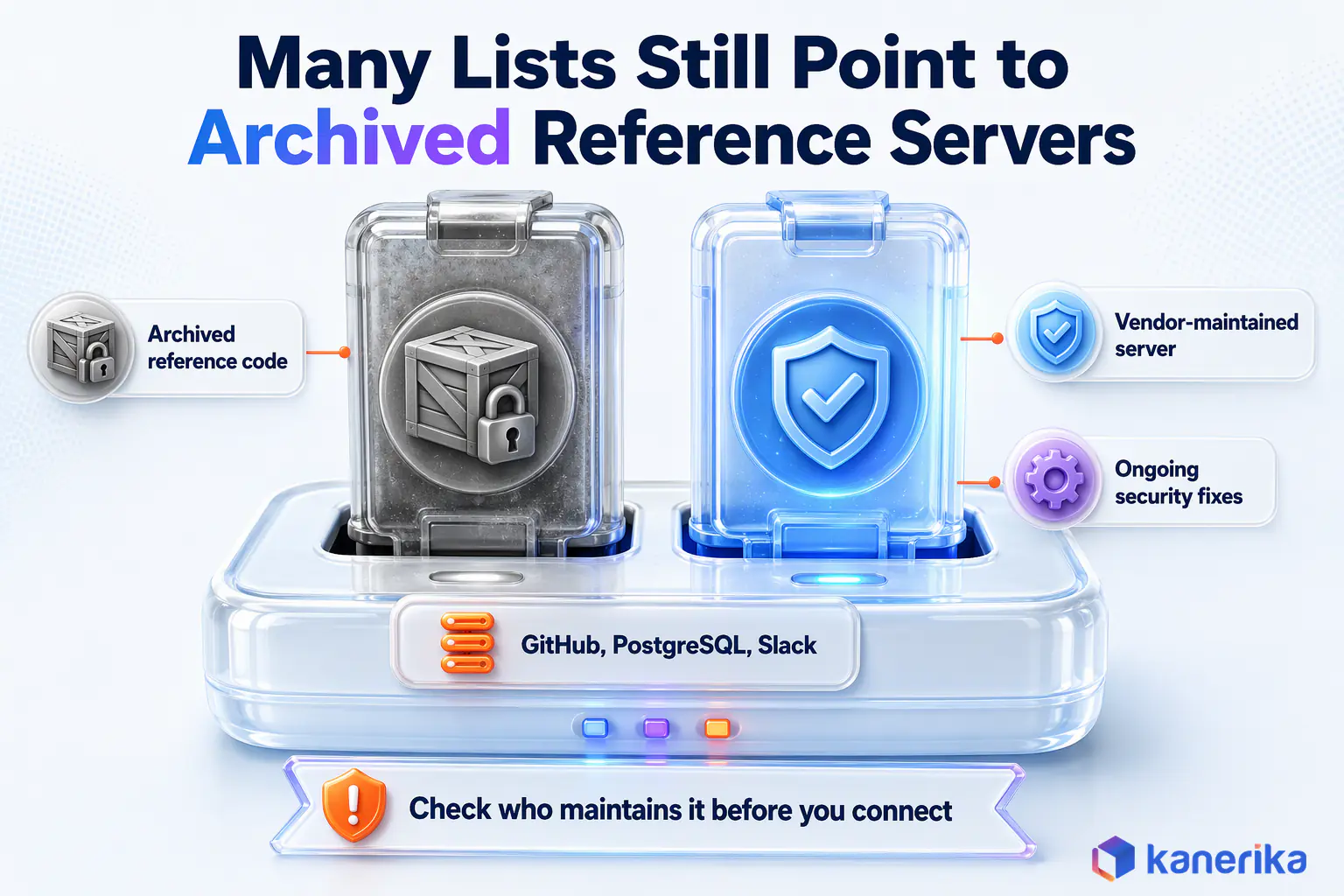
The source of a server matters more than its star count. The modelcontextprotocol/servers repository calls its reference servers educational examples rather than production-ready solutions. It has also archived the old GitHub, PostgreSQL, Slack, Sentry and Brave Search servers, and the Brave entry now points to the official @brave/brave-search-mcp-server package. The reference set still maintains a Filesystem server, where you pass allowed directories on the command line and can add --read-only.
Many lists still recommend those archived builds, so a team that copies one inherits code nobody patches. That is why this list favors servers run by the company behind the product. It names a community option only when no official one exists.
The official MCP Registry opened in preview on September 8, 2025, and it is a good place to confirm who publishes a server. Kanerika’s roundup of agentic AI tools also covers the frameworks that sit above these servers.
What We Checked for Each Server
Governance carried the most weight, because adoption is running ahead of control. In OneTrust’s 2026 AI-Ready Governance survey, 87% of organizations encourage AI agent use. Yet only 47% have clear governance, oversight and controls in place, a gap Kanerika’s State of AI Governance 2026 report also tracks.
So each pick below names its sign-in method and the control that limits it. We also looked at hosting and cost of use. Remote servers save setup time, while local ones keep credentials on one machine, and some, such as Atlassian’s, spend Rovo credits on certain search tools.
Best MCP Servers for Data and Analytics
Data servers carry the biggest payoff and the biggest risk, because they touch the numbers people act on. The strongest options now come from the data platforms themselves. So the agent inherits the roles and grants your data team already maintains, rather than a new set nobody reviews.
1. Snowflake-Managed MCP Server
The Snowflake-managed MCP server turns Cortex Analyst, Cortex Search and Cortex Agents into tools an agent can call. It also handles custom tools and SQL execution. Because it runs inside your Snowflake account, there is no separate server to host or patch.
Sign-in uses Snowflake OAuth by default, or External OAuth against your own identity provider. Role-based access on the server and on each tool then decides which tools an agent can discover. So a role without the grant never even sees them.
Pick it when Snowflake already holds your governed tables and semantic views. Kanerika’s guide to Snowflake Cortex Agents also covers the agent layer this server exposes.
2. Databricks Managed MCP Servers
Databricks ships its managed MCP servers in the system.ai schema, so there is nothing to host. Each one is a Unity Catalog securable. That means you grant access the same way you grant it on a table, and Unity Gateway can add per-call policies on top.
Genie One MCP is generally available. The system.ai.dbsql server, by contrast, runs SQL with the caller’s own Unity Catalog and warehouse permissions. It was still in Beta, along with the sandbox and web search servers, when Databricks last updated the page on November 18, 2026.
Recheck the release stage before a production rollout, since Beta terms can change. For the natural-language layer behind Genie, see Kanerika’s guide to Databricks Genie.
3. Microsoft Fabric MCP and Power BI Authoring MCP
Microsoft’s MCP catalog lists Fabric MCP as a Public Preview, local-first server. It gives agents Fabric’s public APIs, item definitions and best practices without connecting to live environments. That makes it a safe way to draft pipelines or notebooks, while a separate Real-Time Intelligence server queries live RTI data.
The Power BI Authoring MCP server (formerly Power BI Modeling MCP) goes further, because it writes. It can create and update tables, columns, measures and relationships across Power BI Desktop and Fabric semantic models. For semantic models in a Fabric workspace, Microsoft recommends its remote hosted server, which needs no install and gets updates from Microsoft. The local build also does not run on macOS.
Give it a development workspace first, so a bad measure never reaches a live report. Kanerika’s guide to Microsoft Fabric data agents also shows the read side of the same estate.
4. dbt MCP
The dbt MCP server exposes SQL tools such as execute_sql and text_to_sql. It also exposes Semantic Layer tools such as list_metrics and query_metrics, plus Discovery API tools and the dbt CLI. For metric questions, the Semantic Layer tools matter most, because they return the governed definition of revenue instead of a guessed query.
The README is blunt about the CLI tools, which it says could modify your data models, sources and warehouse objects. So enable them only for trusted clients on development targets. Note too that dbt Labs completed its merger with Fivetran on June 1, 2026, and Kanerika’s dbt guide covers the tool itself.
5. Supabase MCP (and the PostgreSQL Reference Server)
The archived PostgreSQL reference server still turns up in many lists. For Postgres-backed apps, however, the maintained route is the Supabase MCP server at mcp.supabase.com. You can scope it to one project with project_ref, run it in read_only mode and limit it to chosen feature groups.
Supabase’s own docs describe a prompt-injection case in which a support ticket carried instructions aimed at the agent. So their advice is to scope the server, turn on read-only and keep manual approval of tool calls. Do all three before you connect any production project.
Plain-English data access works when the source is governed. For example, Kanerika gave a dairy company’s sales team plain-English queries over Azure SQL through Microsoft Copilot and Power Automate. Sales meetings then became 25% more efficient, and although that project used Copilot rather than MCP, it follows the same pattern as these servers.
Two more resources also help here. Clean definitions make every data server more accurate, which is why Kanerika’s guide to metadata management is worth reading first. Also, if you are weighing MCP tools against retrieval, the MCP vs RAG comparison sets out when each one fits.
Best MCP Servers for Software Development
These four servers answer the questions about the best MCP servers for Claude Code, Cursor and VS Code. Each one works in all three clients. So start with GitHub, Context7 and Playwright, then add Sentry once the agent debugs real production errors.
6. GitHub MCP Server
The official GitHub MCP Server runs remotely at api.githubcopilot.com/mcp/ with OAuth or a personal access token. It also runs locally for clients that cannot reach remote servers. In VS Code, remote OAuth needs version 1.101 or later.
Its controls are the most granular on this list. Toolsets work as an allow-list, so –toolsets repos,issues,pull_requests keeps Actions and security tools out of reach. The –read-only flag then exposes only read tools and overrides any write tool you request. Lockdown mode, finally, limits public-repository content to authors with push access.
Lockdown mode targets a real attack pattern. In May 2025, Invariant Labs showed that a malicious issue in a public repository could steer an agent into leaking private repository data. The agent in that test was using the GitHub MCP integration. GitHub calls lockdown a best-effort filter, not a security boundary, so the read-only flag and a narrow token still do the real limiting.
7. Context7
Context7, from Upstash, pulls current, version-specific documentation and code examples into a coding agent. That targets a familiar failure, a confident call to an API that changed two releases ago.
It runs remotely at mcp.context7.com/mcp. A free API key, sent as an Authorization: Bearer header, is optional and raises the rate limits. Because it only returns documentation, it is one of the safest servers to connect first. For Microsoft stacks, the Microsoft Learn MCP Server does the same job for official docs, and it is free with no key. Design-led teams can add Figma’s MCP server, which gives an agent design context for code and can write to the canvas, so connect it read-first.
8. Playwright MCP
Microsoft’s Playwright MCP lets an agent drive a real browser through structured accessibility snapshots instead of screenshots. So it needs no vision model, and its clicks are more predictable than pixel guesses. It requires Node.js 20 or newer.
Use it to reproduce a bug, check a form or run a smoke test after a change. Point it at staging first, because a browser session signed in to production can click anything the user can.
9. Sentry MCP
Sentry’s remote server at mcp.sentry.dev sits between the coding assistant and the Sentry API. It is built for debugging in tools such as Cursor and Claude Code. Sign-in is OAuth, so the agent sees what your Sentry account sees.
Add it once the first three are steady. After all, an agent that reads the stack trace, the release and the failing line has more to work with than a pasted error. Teams on Azure DevOps can also run Microsoft’s local Azure DevOps MCP server in the slot GitHub fills here.
Scoping work to the change is the habit that makes coding agents pay off. For a global compliance SaaS company, Kanerika’s Test Lens AI runs only the tests each change affects. As a result, regression runs fell from 3-4 hours to under 1.5 hours, with a 90% pass rate on stabilized modules. A tight GitHub toolset applies that same rule to a coding agent.
Case Study
Regression Runs Cut From 3-4 Hours to Under 1.5
For a global compliance SaaS company, Kanerika’s Test Lens AI runs only the tests each change affects, cutting regression runs from 3-4 hours to under 1.5 hours with a 90% pass rate on stabilized modules.
Read the Case Study →Choosing the client matters as much as choosing the servers. Kanerika’s comparison of GitHub Copilot, Claude Code, Cursor and Windsurf covers that decision. The guide to AI coding agents then explains how these agents plan and act.
Best MCP Servers for Team Knowledge and Workflow
Team-tool servers give an agent the context that lives in tickets, pages and threads. They also act as the signed-in user, so each person’s own permissions become the agent’s limit.
10. Atlassian MCP Server
The Atlassian remote MCP server can search and summarize Jira, Jira Service Management, Confluence and Bitbucket. It can also create or update work items. Because it signs in with OAuth 2.1, actions respect each user’s existing permissions, while service-account sign-in covers shared agents.
Atlassian’s own guidance also belongs in your rollout plan. A client acts on every connected product with your permissions. So use least privilege, review high-impact changes and watch the audit logs.
11. Notion MCP
Notion MCP lets an assistant search a workspace, create and edit pages and manage databases. It connects to Claude, ChatGPT and Gemini, and its remote endpoint is mcp.notion.com/mcp.
Workspace admins also get controls over which MCP clients members can use. That matters, because a page an agent can edit is also a page it can overwrite.
12. Slack MCP Server
The Slack MCP server lets an agent search messages, files and users, send messages and work with canvases and lists. It speaks JSON-RPC over Streamable HTTP at mcp.slack.com/mcp. However, it supports neither SSE nor Dynamic Client Registration.
Every client must be a registered Slack app, so workspace admins approve it before anyone connects. It also uses confidential OAuth with a client ID and secret. That is stricter than most servers here, and it suits a workspace full of customer conversations.
13. Linear MCP
Linear’s centrally hosted server uses Streamable HTTP and OAuth 2.1 with dynamic client registration, or an API key. Its read-write endpoint is mcp.linear.app/mcp.
For a first rollout, use a read-only route instead. Linear gives you three of them, a choice on the consent screen, the mcp.linear.app/mcp/readonly endpoint, or a request for the read scope alone.
Connected context is the reason these servers exist. At a global compliance SaaS firm, engineers once gathered escalation context by hand across Salesforce, Jira, Confluence and QTest. Then Kanerika deployed the first Triage and Concierge agents, part of 3 AI agents for the platform. Its 10K+ customers now get consistent incident handling.
Some team work is a fixed sequence rather than a judgment call. In that case a workflow tool may fit better than an agent, and Kanerika’s guide to n8n alternatives compares those options.
Case Study
AI Agents That Gather Escalation Context for 10K+ Customers
Kanerika deployed the first Triage and Concierge agents, part of 3 AI agents, for a compliance SaaS firm that once gathered escalation context by hand across Salesforce, Jira, Confluence and QTest. Incident handling is now consistent for its 10K+ customers.
Read the Case Study →Best MCP Servers for Sales and Marketing Teams
Sales and marketing teams want three things from an agent, CRM records, campaign numbers and a safe way to ask about both in plain English. Two servers cover most of that. Both also start in read-only mode when you set them up with care.
14. HubSpot MCP Server
HubSpot’s remote MCP server gives MCP clients read and write access to CRM data such as contacts, deals and engagements. First, you create a user-level app on the new HubSpot Developer Platform with read scopes for the CRM objects you want. Then you connect to mcp.hubspot.com with those OAuth credentials.
Start with read scopes on contacts and deals only. A rep’s agent that summarizes an account before a call earns trust faster than one that edits records. Kanerika’s guide to AI sales agents shows what those early use cases look like.
15. Google Analytics MCP
The Google Analytics MCP server runs locally or as a remote multi-tenant server over the GA Admin and Data APIs. Its tools include run_report and run_funnel_report. Its credentials need only the analytics.readonly scope.
Write tools stay off until you start the server with –allow-write and grant analytics.edit. That default makes it one of the easiest servers to hand to a marketing team. Slack and Notion from the previous section round out a marketing stack.
Picking the server is the easy half. Across 161 engagements, Kanerika’s State of Enterprise AI & Data Modernization 2026 report finds that most AI value leaks at user adoption. So plan training and two or three trusted questions before you connect a second CRM tool.
Best MCP Servers for Web Search and Scraping
Research agents need fresh facts from the open web, which no internal server can supply. They also read text written by strangers, so this is where untrusted input enters most agent stacks.
16. Brave Search MCP
The official Brave Search MCP Server covers web, local, image, video and news search through the Brave Search API. It runs over STDIO or HTTP and needs a BRAVE_API_KEY.
It replaced the archived Brave reference server, so update any setup that still points at the old package. For a general research agent, it is also the simplest search server to start with.
17. Exa MCP
Exa’s hosted server at mcp.exa.ai/mcp ships two default tools. The first, web_search_exa, runs the search, while web_fetch_exa pulls a page as clean markdown. The hosted server works anonymously with rate limits, and signing in with OAuth or an API key raises them.
Clean markdown matters for context budgets, because raw HTML spends tokens on menus and scripts the agent never needs. So Exa is a good fit when an agent reads many pages per task.
18. Firecrawl MCP
The official Firecrawl MCP server handles search, scraping and page interaction, plus parse, crawl, map, Agent and Monitor tools. Its hosted keyless endpoint at mcp.firecrawl.dev/v2/mcp exposes just 3 tools, scrape, search and parse. That suits clients with a tight tool limit.
For larger jobs, Bright Data’s MCP server is another option. By its own figures, it lists 30 tools and a free tier of 5,000 requests a month.
Every page these servers return can carry instructions. “An instruction file can change what the agent tries,” Amit Kumar Jena, Head of AI Development at Kanerika, told CSO Online. So keep web-reading agents away from write tools in the same session, and review anything they want to act on.
Browser agents carry the same risk, and more of it, since they also click and type. Kanerika’s guide to agentic browsers covers that case in detail.
Best MCP Servers for Cloud and Enterprise Platforms
Cloud servers can create, change and delete real infrastructure, so they deserve the strictest setup on this list. Both big options also lean on the identity system you already run.
19. AWS MCP Server
The AWS MCP Server, still in preview, is a remote server managed by AWS. It covers AWS API calls as well as AWS documentation. According to the awslabs MCP repository, access runs through IAM permissions, and calls land in CloudTrail audit logs.
The same repository lists many service-specific servers, and some carry a DEPRECATED label, such as the Cloud Control API MCP Server. So pick the exact server you need, then check its status before you install it. AWS now also recommends its Agent Toolkit for AWS, which it calls the successor to these AWS Labs servers, for production work with coding agents.
20. Azure MCP Server and Microsoft’s Remote Servers
The Azure MCP Server puts all Azure MCP tools in one local server, as listed in Microsoft’s MCP repository. Microsoft also runs remote servers, such as Azure Resource Manager at mcp.management.azure.com and Microsoft Foundry at mcp.ai.azure.com.
For identity questions, the Microsoft MCP Server for Enterprise turns plain-English questions into Microsoft Graph calls over Entra data. It serves read-only IT work, such as security posture and audit telemetry. Cloudflare follows the same product-by-product pattern, with remote servers for observability, Radar and bindings.
The State of Enterprise AI & Data Modernization 2026 report sums up the cloud rule in one line. In governed deployments, “access follows role, not convenience; and every agent action is logged.” On AWS that means IAM roles and CloudTrail, while on Azure it means role assignments.
How to Choose the Right MCP Servers for Your Team
Start from the job and work outward. Table 3 maps common jobs to a first server, the access to grant on day one and the step that still needs a human. That way, a pilot can begin with a single row.
Match the Server to the Job
Table 3: Which MCP Server to Connect First, by Job
| Job | First server | Access to grant first | Needs human approval |
|---|---|---|---|
| Answer questions on warehouse data | Snowflake, Databricks or Fabric server | Read role on curated schemas | Any SQL that writes |
| Fix bugs and review code | GitHub MCP Server | repos, issues and pull_requests toolsets, read-only | Pushes and merges |
| Check current library docs | Context7 or Microsoft Learn | None to start (a free Context7 key raises limits) | Nothing, since both only read |
| Test a web app | Playwright MCP | A staging site session | Runs against production |
| Summarize tickets and docs | Atlassian, Notion or Linear | The user’s own read permissions | Creating or editing items |
| Brief sales reps | HubSpot MCP | Read scopes on contacts and deals | Any CRM edit |
| Report on campaigns | Google Analytics MCP | analytics.readonly | Starting with –allow-write |
| Research the web | Brave Search, Exa or Firecrawl | A Brave API key; Exa and Firecrawl also run keyless at lower limits | Acting on fetched content |
| Operate cloud resources | AWS or Azure MCP Server | A narrow IAM role or role assignment | Create, change or delete actions |
Kanerika Service
Agentic AI Services
Kanerika designs, builds and runs enterprise AI agents with governed access to your data and tools, from readiness assessment and agent design to integration, testing on real workloads and post-launch monitoring.
Explore Agentic AI ServicesStarter Stacks by Team
Most teams do well with three or four servers that share one purpose. These stacks are starting points, and each one keeps write access behind an approval step.
- Developer stack. GitHub, Context7 and Playwright, with Sentry added once the agent debugs production errors.
- Data stack. Your platform’s managed server from Snowflake, Databricks or Fabric, plus dbt MCP’s Semantic Layer tools for governed metrics.
- Business stack. Atlassian or Notion for knowledge, Slack for threads, and HubSpot or Google Analytics for numbers.
- Platform stack. The AWS or Azure server on a narrow role, as well as Microsoft Learn or Context7 for current docs.
How Many MCP Servers Should You Run?
Fewer than most directories suggest. Every tool definition loads into the model’s context, and Anthropic notes that agents now connect hundreds or thousands of tools across dozens of servers. In its own example, loading only the definitions a task needed cut one workflow from 150,000 tokens to 2,000, a 98.7% drop.
Long chains also fail more often. The State of AI Governance 2026 report uses a simple illustration in which each step of an agent’s task goes right 95% of the time and the steps are independent. At that rate, a 10-step task runs clean only about 60% of the time, and a 20-step task about 36%.
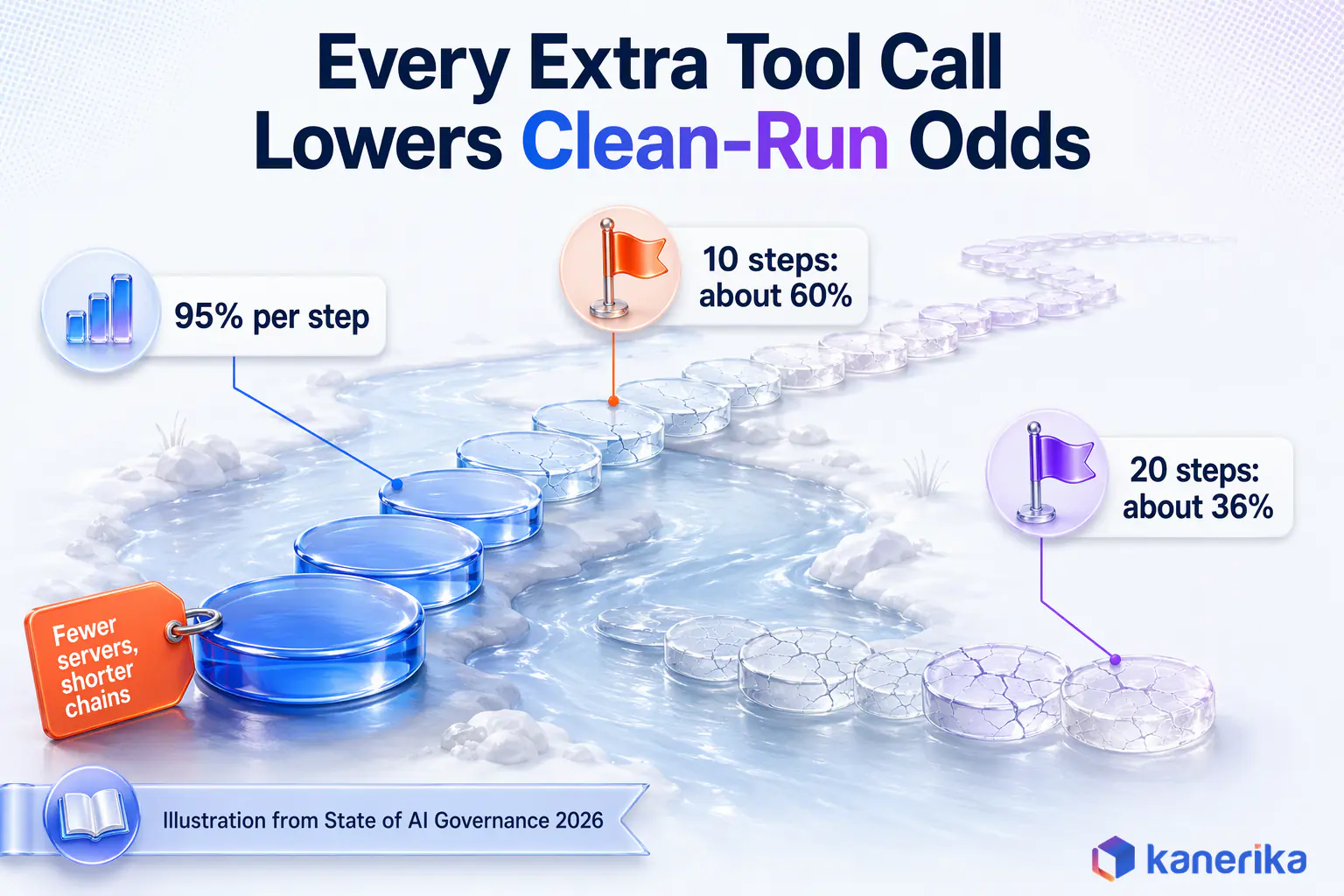
Here is an illustrative example with assumed numbers, not a measured result. Picture an agent that reads a Jira ticket, searches three repositories, opens two docs pages, queries two warehouses, checks Sentry and posts to Slack. That is 10 tool calls, so at 95% per call it finishes cleanly about 60% of the time.
Now give the same agent one warehouse and one repository, so the chain drops to 7 calls. The same math then gives about 70%, which is why a smaller stack is also a more reliable one.
Tool output also costs context. Claude Code warns when any MCP tool output passes 10,000 tokens, and it caps output at 25,000 by default. You can change that cap with MAX_MCP_OUTPUT_TOKENS.
Kanerika’s guide to agentic context engineering covers how to budget that context. When many agents share the same servers, an LLM gateway can also centralize keys, limits and logs.
MCP Server Security and Governance Checks Before Production
Security is where the best MCP servers and the risky ones part ways. The MCP authorization spec makes sign-in optional and points HTTP servers to an OAuth 2.1-based flow. Stdio servers, by contrast, read credentials from the environment, so your protection depends on the server you pick and how you set it up.
Agent controls are still thin in most companies. Cisco’s AI Readiness Index 2025 found only 31% of organizations fully equipped to control and secure AI agents. In OneTrust’s 2026 survey, 28% also reported two or more incidents in which AI systems or agents took unapproved actions.
Treat Tool Output as Untrusted Input
Tickets, issues, web pages and documents can all carry instructions written for the agent rather than the reader. The Supabase support-ticket case and the GitHub issue exploit above both worked this way. So keep manual approval on any write tool in a session that also reads outside content.
The MCP project’s security best practices page, linked below, also covers SSRF, state-handle hijacking and compromise of local MCP servers. For that reason, install local servers only from sources you trust, and pin the version you reviewed.
Start Read-Only and Scope Every Token
Turn on every read-only switch in Tables 1 and 2 before the first session, since that one step limits most of the damage above. Also issue one token per server rather than one broad key. The MCP project’s security best practices page names token passthrough and the confused deputy problem among its attacks. Both attacks also start with a token that can do too much.
Keep the right to ask apart from the right to act. An agent can request a deployment, a refund or a cloud change. But the credential that approves it should sit with a person or a separate service.

“I treat every model as untrusted code, so I separate an agent’s ability to request work from the credentials authorizing spending.”
Amit Kumar Jena, Head of AI Development, Kanerika
From his byline in Cybersecurity Insiders, October 18, 2026
Log Every Call and Keep a Kill Switch
Log each tool call with the user, the server, the arguments and the result. Then keep a way to revoke a server’s token in one step, and test it before go-live. Kanerika’s guide to AI agent observability shows what to capture.
Supply-chain control also helps. Docker’s MCP Catalog packages 300+ verified servers as container images with versioning and provenance. It also lets organizations build custom catalogs of approved servers, so teams install only what security has cleared.
For the wider policy picture, see Kanerika’s guide to AI data governance as well as its breakdown of agentic AI security. Then run this seven-point check on every server before it reaches production.
- Confirm the maintainer, and check that the repository is not archived or marked deprecated.
- Turn on read-only mode or read scopes, then list the exact tools the agent may call.
- Use OAuth or a separate token per server, never one shared admin key.
- Keep human approval on every write, delete or send action.
- Split sessions that read outside content from sessions that can write.
- Log every call, and review the logs each week for the first month.
- Revoke a test token once, so you know the kill switch works.
How to Add an MCP Server to Claude Code, Cursor or VS Code
Adding a server takes a few minutes in any of the three clients. The steps below use the GitHub server as the example, because it has the clearest read-only controls.
- Choose a scope. Claude Code installs servers at local, project or user scope, and project scope writes a .mcp.json file the whole team can share.
- Add the remote server. In Claude Code 2.1.1 or later, run claude mcp add-json with the server URL and a personal access token in the Authorization header. GitHub’s install guide shows this form, and older versions use claude mcp add –transport http with -H.
- Keep the token out of the repo. Write the token as ${GITHUB_PAT}, so the shared .mcp.json holds only the variable name and each developer sets the value locally. For OAuth servers such as Linear, Notion or Supabase, run /mcp, select the server and choose Authenticate.
- Narrow the tools. On the remote server, send X-MCP-Toolsets: repos,issues,pull_requests and X-MCP-Readonly: true as headers (or add /readonly to the URL). The local server takes –toolsets and –read-only instead.
- Set an output budget. Claude Code warns at 10,000 tokens per tool output, while MAX_MCP_OUTPUT_TOKENS changes the 25,000 default.
- Repeat in Cursor or VS Code. VS Code 1.101 or later reads .vscode/mcp.json, while Cursor reads .cursor/mcp.json in the project or ~/.cursor/mcp.json for every project.
Checklist
Enterprise Agentic AI Checklist
A practical checklist for taking AI agents from pilot to production, covering readiness, governance, access control and monitoring, so every MCP server you connect has a clear owner and limit.
Get the Checklist →Copy-Ready Commands and Config
The commands and config blocks for those steps look like this.
# Claude Code 2.1.1+: GitHub's remote server, three toolsets, read-only, shared via .mcp.json
claude mcp add-json github '{"type":"http","url":"https://api.githubcopilot.com/mcp","headers":{"Authorization":"Bearer ${GITHUB_PAT}","X-MCP-Toolsets":"repos,issues,pull_requests","X-MCP-Readonly":"true"}}' --scope project

# Claude Code: raise the per-tool output cap (default 25,000 tokens)
export MAX_MCP_OUTPUT_TOKENS=40000

# VS Code 1.101+: .vscode/mcp.json (VS Code signs in with OAuth)
{ "servers": { "github": { "type": "http", "url": "https://api.githubcopilot.com/mcp/", "headers": { "X-MCP-Toolsets": "repos,issues,pull_requests", "X-MCP-Readonly": "true" } } } }

# Cursor: .cursor/mcp.json (project) or ~/.cursor/mcp.json (all projects)
{ "mcpServers": { "github": { "url": "https://api.githubcopilot.com/mcp/", "headers": { "Authorization": "Bearer ${env:GITHUB_PAT}", "X-MCP-Toolsets": "repos,issues,pull_requests", "X-MCP-Readonly": "true" } } } }
Claude Code has deprecated the SSE transport, so use http for remote servers. In Codex, a remote server goes in with codex mcp add followed by a name and –url, the form Linear’s and Exa’s docs show. When many clients need the same approved set, Docker’s MCP Toolkit and Gateway can run those servers behind one entry point. Both are still in Beta, though.
Building your own server is a different job. Kanerika’s guides to WebMCP implementation and LangGraph MCP integration cover that build side.
How Kanerika Helps Enterprises Put MCP Servers to Work
Here’s the thing about MCP servers. Choosing them is the quick part, and connecting them safely to your own systems is where the real work sits. That’s the part Kanerika, your trusted partner for enterprise agents, takes on, with both Anthropic’s Claude and OpenAI’s models as an OpenAI Select Partner.
Kanerika’s agentic AI services follow the IMPACT methodology. According to that page, implementation runs from readiness assessment and agent design to API and data integration. It then moves through testing on real workloads, staff enablement and post-launch monitoring, so the work doesn’t stop at go-live.
In practice, context is usually the hardest bit. For one client, Kanerika built a context-aware AI agent that unified three disconnected systems with semantic search. Mismatch tickets fell 80%, mapping accuracy rose 40%, and the team saved 22% of its bandwidth.
Case Study
80% Fewer Mismatch Tickets With a Context-Aware AI Agent
Kanerika built a context-aware AI agent that unified three disconnected systems with semantic search, cutting mismatch tickets by 80%, raising mapping accuracy by 40% and saving 22% of team bandwidth.
Read the Case Study →That’s the same idea behind every server on this list, one governed path to each system instead of ad hoc access. Kanerika’s guide to MCP for context-aware AI agents explains why that context layer decides how useful an agent can be.
Your Next Step With the Best MCP Servers
If you’ve read this far, you probably have a shortlist forming and a quiet worry about what an agent could touch. That worry is the right instinct, because the best MCP servers do one job with the least access. So three vendor-built servers, read-only on day one, will serve you better than any long directory.
But here’s what teams usually tell us. The servers connect in an afternoon, then the pilot stalls on sign-in, shared tokens or people who don’t trust the answers yet. The good news is that starting small fixes most of it, because one job and one server give you a result you can show.
Kanerika is a Microsoft Solutions Partner for Data & AI, Certified in the Claude Partner Network, and our agentic AI services build on that habit. Scoping tests to each change, for instance, cut one client’s regression runs from 3-4 hours to under 1.5. So bring one job you’d hand to an agent, and we’ll map its servers, scopes and approvals with you.
You don’t have to work this out alone. And if you’d like the wider picture first, the State of Enterprise AI & Data Modernization 2026 report is a good next read.
Frequently Asked Questions
What are the best MCP servers?
The best MCP servers depend on the job. For coding, GitHub, Context7 and Playwright lead. For data, use the managed server from Snowflake, Databricks or Microsoft Fabric. Atlassian, Slack, Notion and Linear cover team knowledge, HubSpot and Google Analytics cover sales and marketing, and Brave Search, Exa or Firecrawl handle web research. Prefer servers the vendor maintains.
What are the best MCP servers for Claude Code?
A strong starting set for Claude Code is the GitHub MCP Server for repositories and pull requests, Context7 for current library documentation and Playwright MCP for browser testing. Add Sentry when the agent needs to debug production errors. Claude Code adds a remote server with one claude mcp add command and warns when a tool’s output passes 10,000 tokens.
What are the best MCP servers for Cursor?
Cursor works well with the same core set as Claude Code, namely GitHub, Context7, Playwright and Sentry. Data teams often add their platform’s managed server, such as Snowflake or Databricks. Cursor reads servers from .cursor/mcp.json in a project or ~/.cursor/mcp.json for every project, and it can also install official servers from its marketplace.
Are MCP servers free?
Many MCP servers are free to run, but the service behind them may not be. Microsoft Learn MCP is free with no key, and Firecrawl has a keyless free tier with 3 tools. Brave Search needs an API key tied to its own plan, Exa’s hosted server and Context7 work without one at lower rate limits, and Atlassian spends Rovo credits on some search tools. Check each vendor’s pricing before rollout.
Are MCP servers safe to use?
MCP servers are as safe as their setup. Pick vendor-maintained servers, turn on read-only modes such as GitHub’s –read-only flag, and use OAuth or a separate token per server. Keep human approval on write actions, because tickets, issues and web pages can carry instructions aimed at the agent. Log every tool call and keep a way to revoke access fast.
What is the difference between official and community MCP servers?
Official MCP servers are built and maintained by the company behind the product, such as GitHub, Slack or Snowflake, so they follow its API changes and security fixes. Community servers come from independent developers and vary in upkeep. The modelcontextprotocol reference servers are teaching examples, and several of them, including GitHub, PostgreSQL and Slack, are now archived.
Can MCP servers connect to enterprise data warehouses?
Yes. Snowflake runs a managed MCP server inside your account that serves Cortex tools and SQL under role-based access. Databricks provides managed servers in the system.ai schema, governed by Unity Catalog grants. Microsoft lists a Fabric MCP server and a Power BI Authoring server. Each one respects the permissions your data team already set.
How many MCP servers should I install?
Install only the servers an agent needs for its current job, often three or four. Every tool definition uses context before work starts, and Anthropic showed one workflow dropping from 150,000 tokens to 2,000 when only needed definitions loaded. Longer tool chains also fail more often, so a smaller, focused set usually gives more reliable results.
What is the best MCP server for web scraping?
Firecrawl MCP is the strongest choice for scraping, with tools to scrape, crawl, map and parse pages, plus a keyless hosted tier. Exa fits agents that read many pages, because it returns clean markdown. Brave Search suits general search. Treat every scraped page as untrusted input, since page text can carry instructions aimed at the agent.
What are the best MCP servers for sales and marketing teams?
HubSpot’s remote MCP server gives agents CRM contacts, deals and engagements through a user-level app with read scopes. The Google Analytics MCP server reports on GA4 data with read-only credentials by default. Slack and Notion add team context. Start read-only, and plan user training, since most AI value is lost at adoption rather than in the technology.