

DataStage to Microsoft Fabric Migration, Automated With FLIP
IBM DataStage is becoming costly to run, harder to staff, and too slow for AI-ready analytics. Migrate to modern, AI-augmented platforms like Microsoft Fabric with FLIP. Automate assessment, conversion, and validation for faster and lower-risk migrations.
Faster Migration
Lower Migration Cost
Fewer Resources
Get Started with IBM DataStage Modernization Migration
From Legacy IBM DataStage to Modern Data Platforms
Being AI-ready means adopting a modern data platform. FLIP enables that in two phases.
PHASE 1
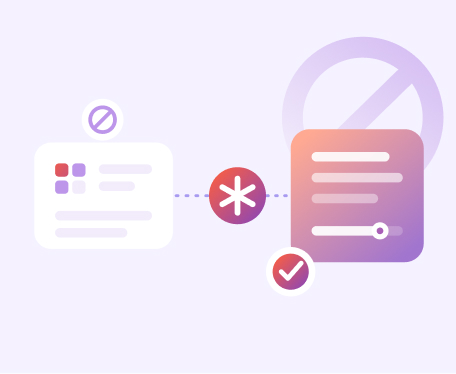
Eliminate IBM Licensing Costs First
FLIP parses the logic and dependencies inside your DataStage jobs and rebuilds them on an open integration layer such as Talend. Engineers validate output rather than rewriting jobs by hand.
- Automate roughly 80% of conversion
- Validate converted output against source
- End IBM licensing spend from phase one
PHASE 2
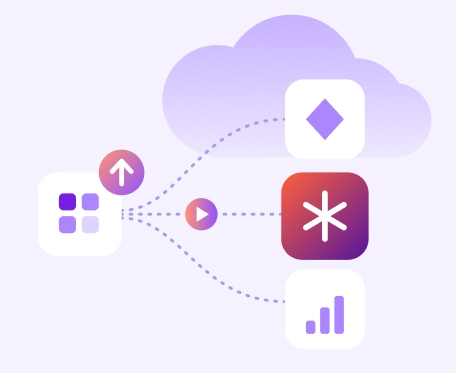
Re-Platform to Microsoft Fabric on Your Terms
When priorities align, FLIP migrates the environment to your target cloud platform, in this case, Microsoft Fabric. The outcome is cloud-native processing, unified analytics, and a foundation ready for AI, on your schedule.
- Migrate to Microsoft Fabric, Snowflake, or Databricks
- Run FLIP-assisted conversion at your pace
- Keep analytics live throughout the cutover
The Cost of Standing Still
The Hidden Tax of Staying on IBM DataStage
DataStage has kept ETL running for years. But staying on it now means rising license spend, scarce skills, slower change cycles, and a data foundation not built for cloud analytics or AI-led decisions.
Escalating License Spend
IBM renewals climb every year for a platform that adds no value.
Stalled AI Initiatives
Analytics and AI projects wait on data stuck in legacy ETL.
Manual Migration Risks
Manual rewrites are slow and error prone, causing delays.
Capacity That Cannot Scale
On-premises hardware caps throughput and inflates peak reporting costs.
Scarce DataStage Skills
DataStage specialists are leaving the market, and every hire costs more.
Logic Trapped in Legacy Jobs
Years of business rules sit locked inside jobs no one documents.
See It Work
Watch FLIP Automate DataStage to Microsoft Fabric Migration
A short walkthrough of how FLIP reads legacy jobs, converts the logic automatically, and re-platforms the estate to Microsoft Fabric.
- Reads and parses existing DataStage jobs automatically
- Phase one converts jobs to Talend, up to 80% automated with team validation
- Stops IBM licensing costs from day one
- Phase two moves Talend to Microsoft Fabric at your pace
Your team controls the timeline.
FLIP handles the conversion.
The Payoff
Business Case for Migrating from DataStage to Microsoft Fabric
Modernization pays for itself. It lowers run cost, shortens time to insight, and turns a static data estate into a foundation the business can build on.
Lower Total Cost of Ownership
Retire IBM licensing and pay for cloud compute on actual usage.
- Remove fixed maintenance overhead
- Scale capacity only when needed
Faster Time to Insight
Parallel cloud pipelines deliver reporting and analytics in a fraction of the time.
- Run workloads at elastic scale
- Compress report turnaround
A Foundation Ready for AI
Land data where analytics, BI, and AI draw from one governed source.
- Feed models from a single source
- Unify analytics across the estate
Why FLIP
Why Choose FLIP for IBM DataStage to Fabric Migration
FLIP turns a high-risk, multi-quarter rewrite into a controlled, automated program with measurable cost and speed gains at every stage.
Faster Migration
Automated conversion moves your estate in weeks instead of quarters of manual rewriting.
Lower Migration Cost
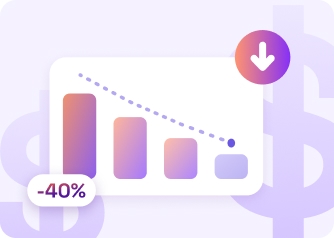
Cut conversion labor and end IBM licensing spend early, in phase one.

Fewer Resources Needed
Shift engineers from rebuilding jobs to validating output, freeing senior talent.
Lower Delivery Risk
Validate data parity against source before cutover, so results match the originals.
Platform Freedom
Re-platform to Microsoft Fabric, Snowflake, Databricks, or any platform of your choice.
Phased Control
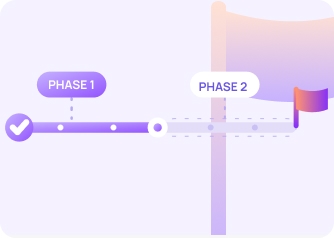
Run modernization in two stages, on a timeline the business controls.
Kanerika Migration Execution Framework
FLIP follows a structured framework on every migration, adapted to the size and complexity of your estate.

STEP 1
Assess
Inventory jobs, stages, and dependencies
STEP 2
Convert
Automate transformation logic with FLIP

STEP 3
Validate
Test data parity against source jobs
STEP 4
Migrate
Test data parity against source jobs

STEP 5
Optimize
Tune cost, performance, and governance
Automotive Success Stories
Migration
25% Lower Storage Costs for Steel Manufacturing on Azure
Impact:
- 25% Reduction in storage expenses
- 2.5% Increase in revenues
- 40% Improvement in productivity
Migration
52% Fewer Config Errors in Connected Vehicle Data
Impact:
- 18% Increase in operational efficiency
- 25% Faster decision making
- 52% Decrease in manual config errors
Migration
90% Data Accuracy with Microsoft Fabric & Power BI
Impact:
- 85% Increased Operational Visibility
- 90% Data Accuracy & KPI Reliability
- 100% Scalability & Support
Frequently Asked Questions (FAQs)
01What is IBM DataStage modernization?
IBM DataStage modernization means moving legacy DataStage ETL jobs and their business logic to a modern cloud data platform. The work covers inventorying existing jobs, converting transformation logic, validating that output matches the source, and re-platforming to a target such as Microsoft Fabric, Snowflake, Databricks, or Azure. Kanerika runs this through FLIP, an automation-led migration accelerator that converts the bulk of the logic automatically and leaves your team to validate rather than rewrite. The result is lower run cost, faster data delivery, and a foundation ready for analytics and AI.
02Why should we move off IBM DataStage?
Three pressures usually drive the decision. License and support renewals keep climbing while the platform delivers the same output as before. The pool of engineers fluent in DataStage keeps shrinking, so every change costs more. And legacy on-premises ETL keeps modern analytics and AI workloads out of reach, since those expect cloud-native data. Moving to a modern platform cuts fixed cost, speeds up reporting, and prepares your data estate for AI. The barrier is usually the perceived risk of migration, which is exactly what an automation-led approach reduces.
03How does FLIP migrate IBM DataStage jobs?
FLIP reads your DataStage jobs, parses the transformation logic and dependencies, and rebuilds them on a target environment. A large share of the conversion runs automatically, so your team validates output instead of reverse engineering jobs by hand. FLIP inventories every job and stage, converts the logic, flags complex edge cases for human review, and tests data parity before any cutover. Kanerika delivers this as a two-phase path so you can stop IBM licensing early and move to the cloud later. See the FLIP migration accelerator for detail.
04Which platforms can you migrate DataStage to?
The destination is your choice. Kanerika migrates DataStage estates to Microsoft Fabric, Snowflake, Databricks, and Azure, among other modern platforms. As a Microsoft Solutions Partner for Data and AI and a Featured Fabric Partner, Kanerika has particular depth on the Microsoft stack, with strong Snowflake and Databricks delivery experience as well. The FLIP framework stays the same regardless of target, so the platform decision can follow your existing investments and team skills rather than being forced by the migration tool.
05How long does an IBM DataStage migration take?
Timelines depend on the size of the estate, the complexity of the jobs, and how many edge cases need manual review. Because FLIP automates a large share of the conversion, projects move considerably faster than a manual rewrite. A phased approach also changes how time feels in practice. Phase one gets you off IBM licensing relatively early, which delivers cost relief before the full cloud migration completes. A migration assessment maps your specific estate and produces a realistic stage-by-stage schedule before any commitment.
06Will modernization preserve our existing business logic?
Yes. Preserving transformation logic is the core of the work. FLIP parses the rules embedded in your DataStage jobs and rebuilds them on the target environment, then validates the output against the original pipelines. Data parity testing runs before any cutover, so you confirm the new pipelines produce the same results as the old ones. This is what separates a controlled migration from a risky rewrite. Your team reviews and signs off on the converted logic rather than reconstructing years of rules from scratch.
07Can we modernize without a full cloud migration at once?
Yes, and that is the point of the phased path. Many teams stay stuck on DataStage because moving to cloud also means moving the data warehouse, and doing both together is too much to absorb. FLIP separates the two. Phase one rebuilds your jobs on an open integration layer and ends IBM licensing spend. Phase two moves that environment to your chosen cloud platform when the business is ready. You modernize in stages, capture savings early, and avoid a single high-risk cutover.
08How does Kanerika reduce migration risk?
Risk drops through automation, validation, and governance. FLIP converts the bulk of the logic automatically, which removes the human error of manual rewriting. Data parity testing confirms the new pipelines match the source before cutover. The phased model means you never bet the whole estate on one switchover. On top of that, Kanerika delivers under ISO 27001, ISO 27701, SOC 2, ISO 9001, and CMMI Level 3 certifications, so security and process controls are in place throughout. Pair this with data integration services for end-to-end coverage.
09How Does IBM DataStage to Microsoft Fabric Migration Work?
The process starts with an assessment of DataStage jobs, sequences, and dependencies. FLIP parses the ETL logic and converts it into Microsoft Fabric pipelines and notebooks. Engineers review the output, run data parity validation against the source, and cut over in planned waves. Analytics stay live throughout the DataStage migration.
10What Changes When You Move from DataStage to Microsoft Fabric?
Licensing moves from IBM renewals to Fabric capacity-based pricing. Parallel jobs and sequences become cloud data pipelines, data lands in OneLake, and Power BI connects to it directly. Teams work on one Fabric platform, and the on-premises ETL servers retire. That gives AI and real-time analytics workloads governed data to run on.
11How Does FLIP Benefit a DataStage Migration?
FLIP automates up to 80% of DataStage job conversion, which shortens timelines and reduces manual rewrite effort. It captures business logic from existing jobs, so rules carry over intact. Data parity checks compare converted output with the source before cutover. Teams get faster ETL modernization with fewer errors than a hand-coded rebuild.
12How Does Kanerika Support DataStage to Fabric Migration End to End?
As a Microsoft Solutions Partner for Data and AI and a Fabric Featured Partner, Kanerika covers every stage. The team runs assessment, conversion, validation, migration, and optimization, pairing FLIP automation with experienced data engineers. Clients get one accountable partner from legacy ETL discovery and cutover planning through post-migration support on Microsoft Fabric.
13Can You Migrate DataStage to Fabric in Phases?
Yes. Phase one moves DataStage jobs to an open integration layer, which ends IBM licensing spend early. Phase two re-platforms to Microsoft Fabric when priorities align. Phasing spreads cost and risk, keeps reporting running, and retires workloads wave by wave. A free migration assessment maps which jobs move first and builds the schedule.