AI Accounts Receivable and Collections Agent
Collect faster, prioritize smarter, and bring DSO down without burning customer relationships.
Payments matched to open invoices
Reminders tuned to customer risk
Approves every write-off
Type II certified delivery
Certified security practices
Technology certifications
Collect faster, prioritize smarter, and bring DSO down without burning customer relationships.
Receivables age because follow-up is manual, and manual follow-up always loses to month-end. Kanerika builds and runs an AI accounts receivable agent on your own cloud that watches every open invoice, ranks the collections worklist by risk and value, and drafts the right reminder with full account context for your team to approve. It is accounts receivable automation software built around your team, so cash comes in sooner and collectors stop working from a spreadsheet.
How the Accounts Receivable Agent Works Inside Your Finance Stack
Deployed on Your Infrastructure
Kanerika deploys the agent on your Azure, AWS, GCP, or on-premises environment, next to your ERP and billing systems. Your financial data never sits in a third-party SaaS.
Governed and Secure by Design
Kanerika is SOC 2 Type II, ISO 27001, and ISO 9001 certified. The agent inherits your access controls and leaves an audit trail on every action.
Works Where Finance Teams Work
Worklists, reminder drafts, and escalation alerts arrive in Microsoft Teams, Slack, or email, where your AR team already lives.
Your Financial Data Stays in Your Tenant
Invoices, customer terms, and payment history never leave your environment and are never used to train external models.
Controllers Stay in the Loop
Reminders, escalations, and write-off recommendations go out only after review under the approval rules your controller defines.
Every Action Is Source-Traced
Each recommendation cites the invoices, terms, and payment behavior behind it, so a collector can defend any call the agent helped make.
AP Copilot for Invoice Processing
Kanerika’s invoice automation on FLIP shows the payables side of the finance workflow, the sibling of the receivables agent on this page.
Accounts Receivable Software Built for Invoice to Cash
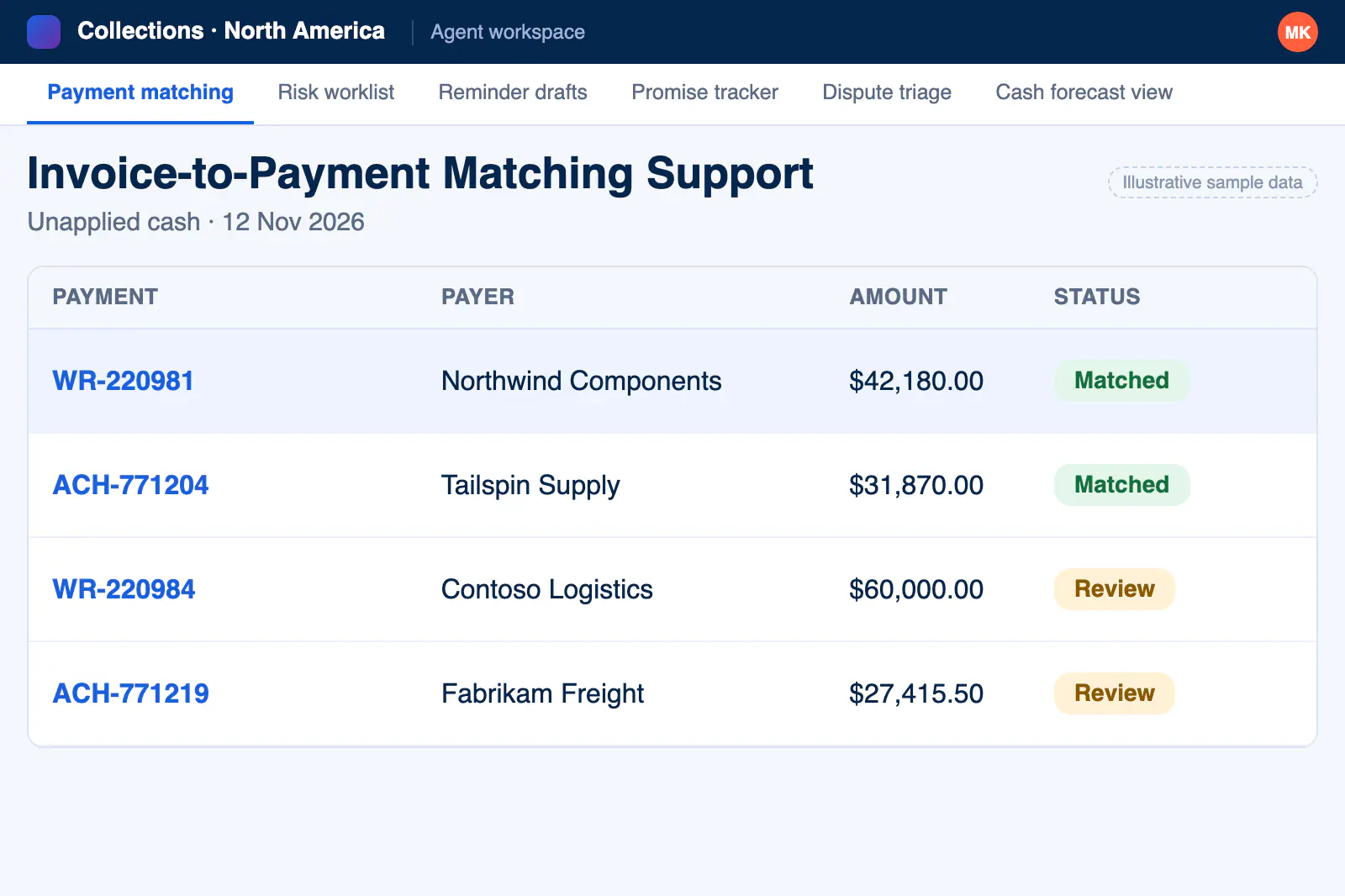
Invoice-to-Payment Matching Support
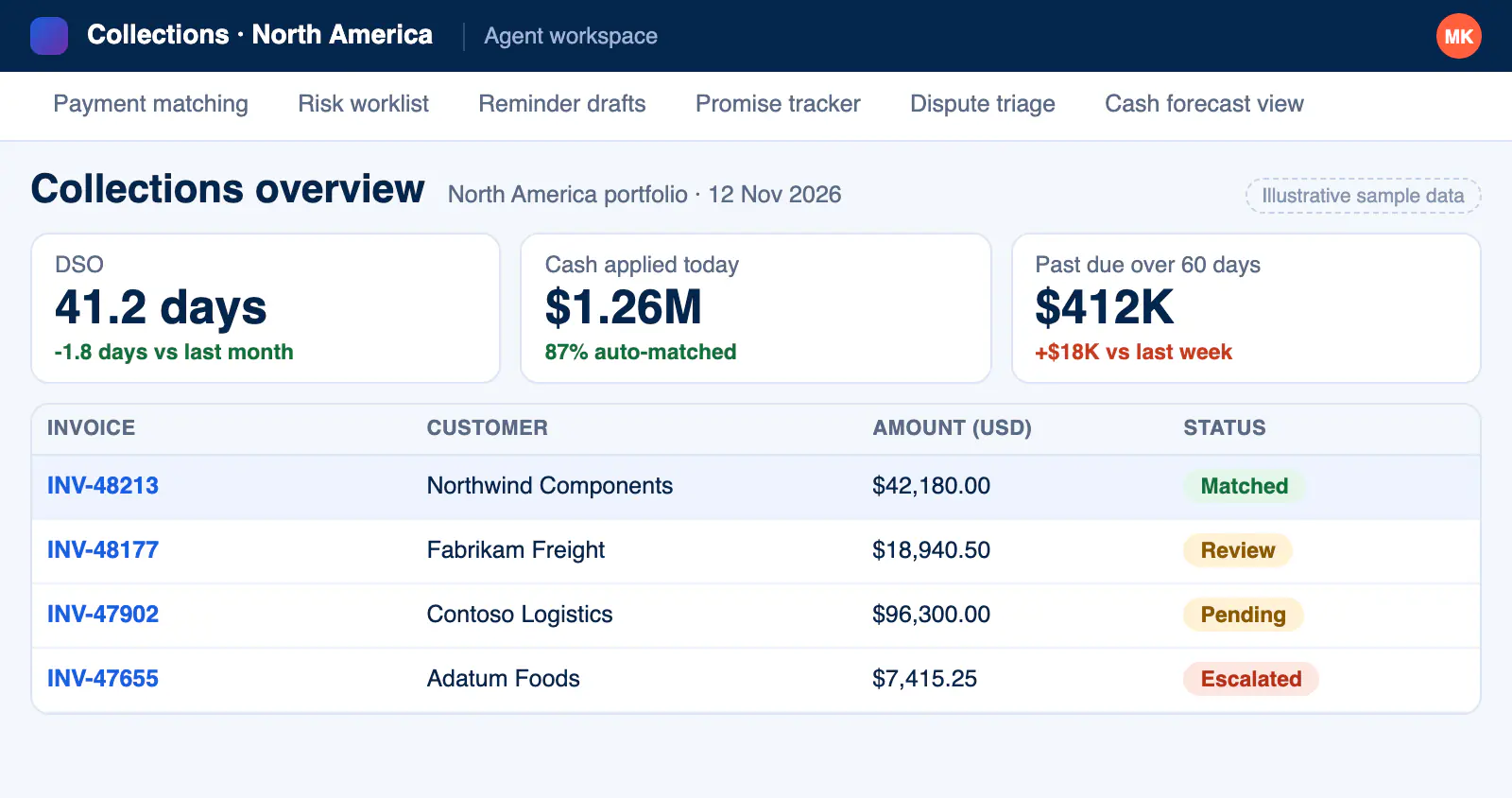
The agent suggests matches between incoming payments and open invoices, including partial payments and lump sums, and routes the exceptions to a person.
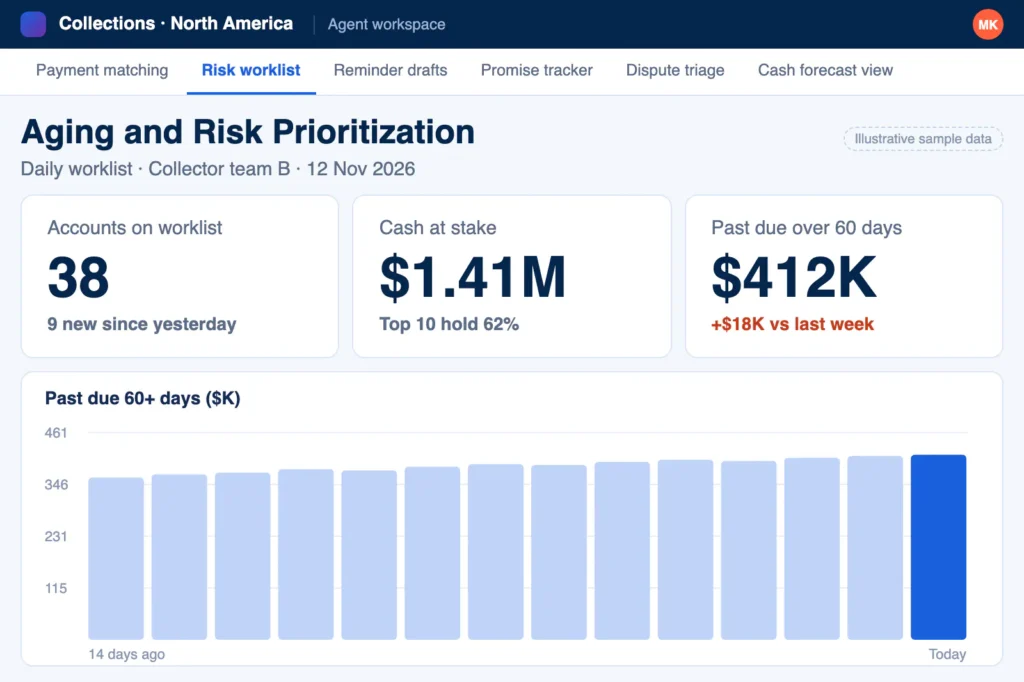
Aging and Risk Prioritization
The daily worklist ranks accounts by amount, age, payment behavior, and broken promises, so collectors call the accounts that move cash first.
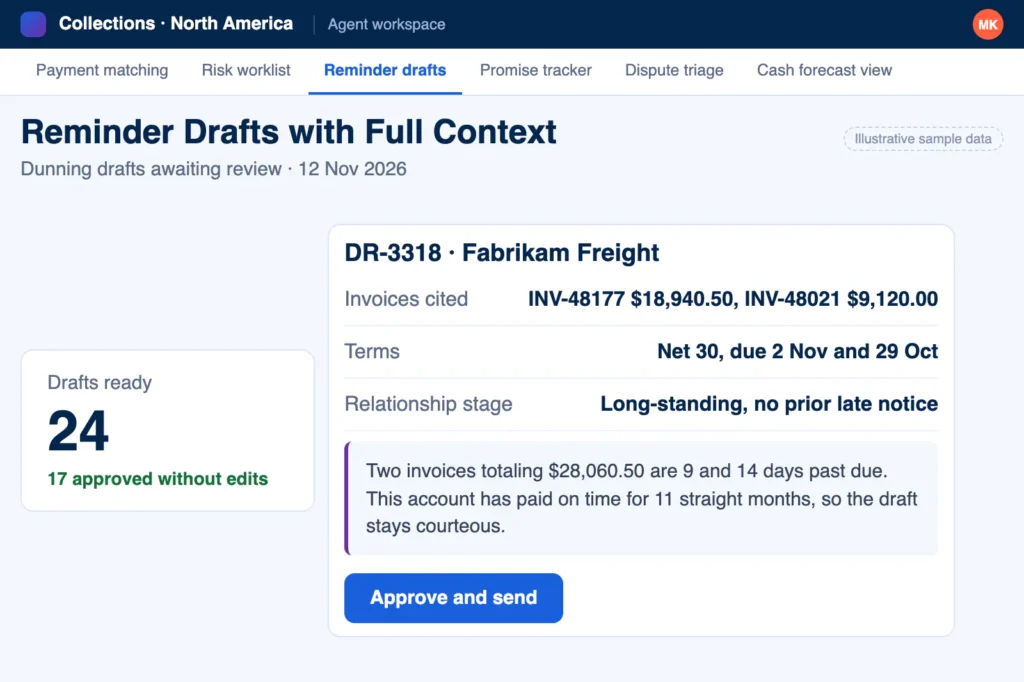
Reminder Drafts with Full Context
Each dunning draft references the exact invoices, terms, and history for that account, in a tone matched to the relationship stage.
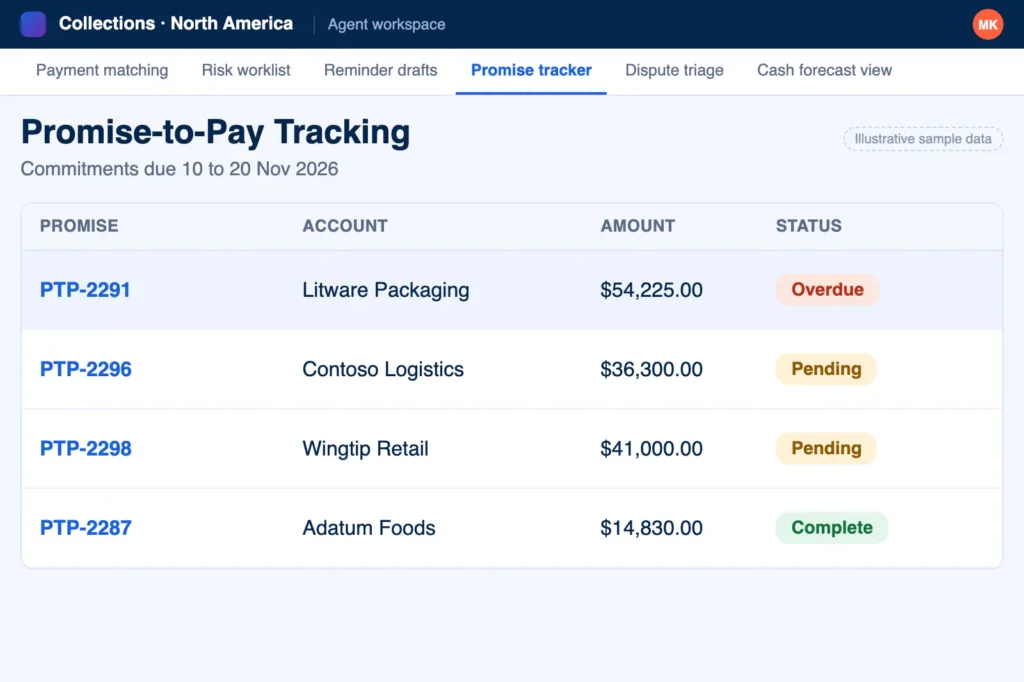
Promise-to-Pay Tracking
Commitments from customers are logged and monitored, and the agent resurfaces the account the moment a promise is broken.
Dispute and Short-Pay Triage
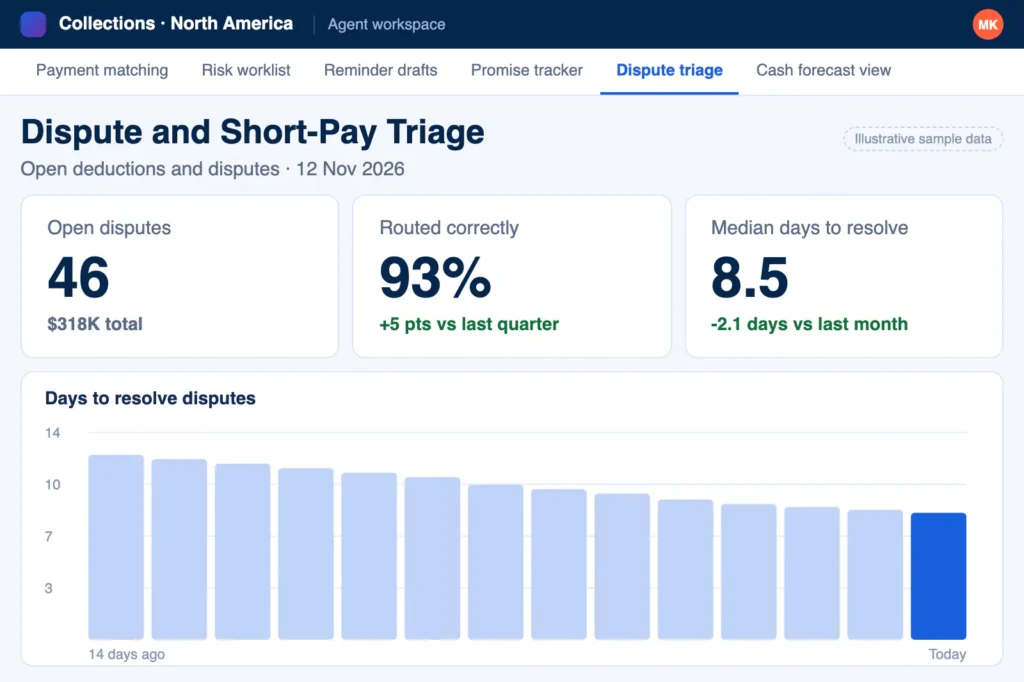
Disputes and deductions are classified by reason and routed to the right owner, so a pricing question stops blocking an otherwise collectible balance.
Cash Visibility for the Forecast
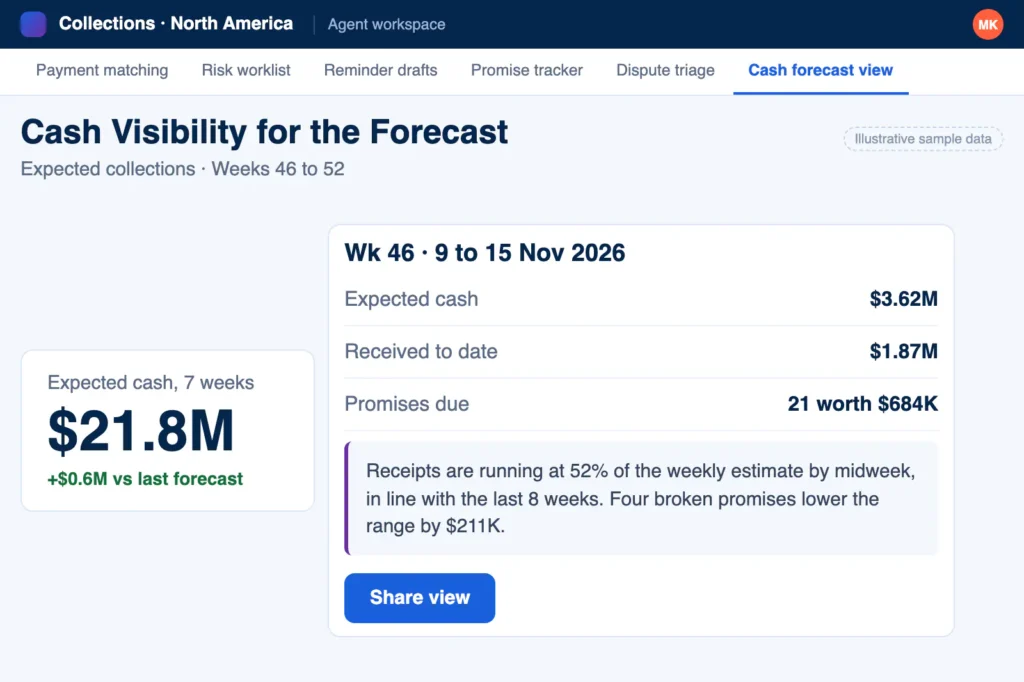
Collection outcomes feed a live view of expected cash. For forward-looking revenue and margin modelling, Kanerika pairs it with the AI financial forecasting agent .
Deploy Your Accounts Receivable Agent in Weeks
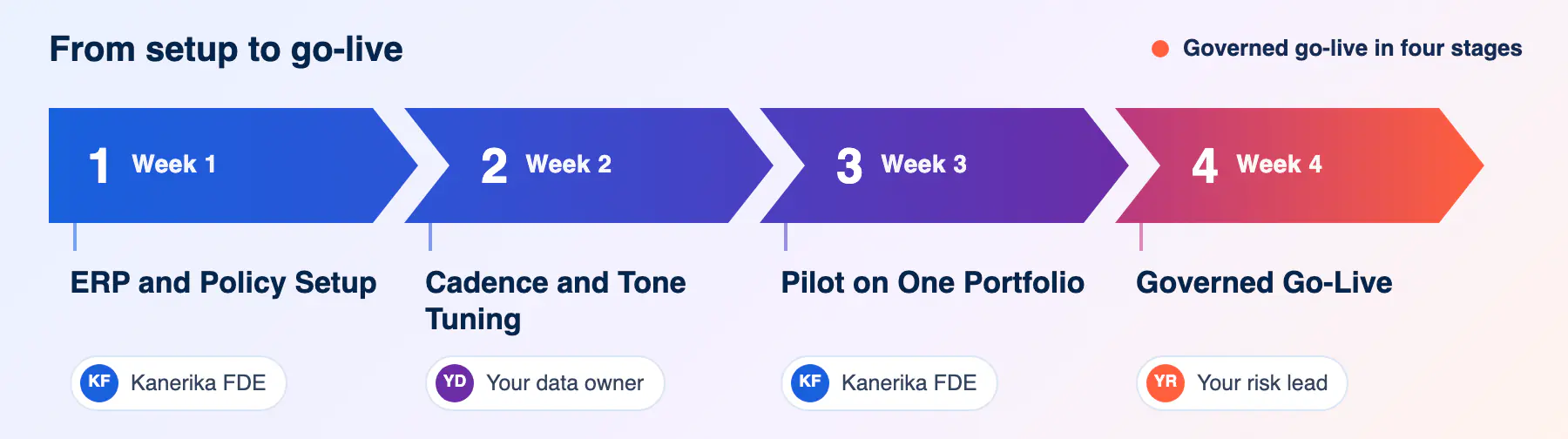
ERP and Policy Setup
Kanerika connects the agent to your ERP, billing, and banking data, then encodes your credit policies and approval thresholds.
Cadence and Tone Tuning
Dunning sequences, escalation rules, and message tone are tuned with your AR and sales leadership so collections match your customer strategy.
Pilot on One Portfolio
One collector team runs a live portfolio with the agent. Corrections and outcomes refine prioritization before wider rollout.
Governed Go-Live
The agent expands across portfolios with approval gates, audit trails, and controller oversight in place from day one.
Where Finance Teams Put the Agent to Work
High-Volume B2B Collections
Thousands of open invoices worked by a small team, with the agent deciding what deserves attention today.
Subscription and Recurring Billing Follow-Up
Failed payments and lapsed renewals chased consistently, with escalation before the revenue quietly churns.
Distributor and Dealer Receivables
Credit-limit exposure tracked across a dealer network, with early flags when a usually prompt account starts slipping.
Project-Based Invoicing
Milestone invoices tracked against contract terms, so professional services firms stop financing their own clients.
Early Warning on At-Risk Accounts
Payment behavior shifts surface weeks before an account becomes a write-off conversation.
Month-End Close Support
Reconciled receivables, documented disputes, and a clean aging report ready when the close starts rather than after it.
Industries Where Accounts Receivable Automation Moves Cash Fastest
Manufacturing
Long payment terms and large invoice values, where a few late accounts distort working capital. See Kanerika in manufacturing .
Logistics and Supply Chain
High invoice volume and frequent short-pays from rate disputes. See logistics and supply chain .
Retail and FMCG
Deduction-heavy trade receivables where unresolved claims quietly erode margin. See retail and FMCG .
Healthcare
Complex payer mixes and slow reimbursement cycles that reward disciplined follow-up. See Kanerika in healthcare .
Insurance
Premium receivables and broker balances tracked across programs. See Kanerika in insurance .
Banking and Financial Services
Fee and service receivables managed under strict audit and conduct requirements. See banking and financial services .
Why Finance Teams Choose Kanerika for Receivables AI
Built by Kanerika's 300+ engineers, who have delivered for 100+ enterprise clients. Live in weeks, on your own data.
It matches payments to open invoices, even partial ones, and hands the odd ones to a person.
Every reminder names the actual invoices and history, so it reads like a person wrote it.
Disputes go straight to the right owner, so a pricing question stops holding up a good balance.
Results from Kanerika's Finance Automation Deployments
90% Faster Vendor Selection with LLM Agreement Processing
Impact:
- 82% Reduction in manual processing time
- 75% Increase in cloud integration efficiency
- 90% Boost in vendor selection
99% Faster Invoice Processing with Automation
Impact:
- 45% Decrease in maintenance costs
- 95% Savings in developmental efforts
- 99% Reduction in processing time
90% Less Manual Work in AP with UiPath Automation
Impact:
- 90% Reduction in manual intervention
- 400+ Man-hours saved per month
- 30% Faster invoice processing
FAQs
An AI accounts receivable agent monitors every open invoice, ranks the collections worklist by risk and value, drafts context-aware payment reminders, tracks promises to pay, and triages disputes. Your team approves actions before they reach a customer. It replaces spreadsheet-driven follow-up with a governed process that works every account consistently.
No. Every reminder and escalation follows the approval rules your controller defines. Many finance teams start with full human review on everything, then let routine early-stage reminders flow after a set period of clean performance. Sensitive accounts and legal-stage escalations always stay behind a named human approval, permanently and by design.
The agent is built on your stack, so Kanerika connects it to the ERP, billing, and banking systems you already run during the first phase of setup work. Invoice, payment, and customer data stay inside your tenant. Your team keeps working in familiar systems while the agent handles monitoring and drafting underneath.
Payables automation processes invoices your company owes, and Kanerika covers that side with FLIP AP automation. The receivables agent is accounts receivable management software for money owed to you, covering collections prioritization, reminders, promises, and disputes. The two sit on opposite sides of the ledger, and many finance teams eventually choose to deploy both of them together.
Prioritization weighs invoice value, days overdue, the customer’s payment history, broken promises, and open disputes. The goal is cash impact, so a large account drifting late outranks a small one long overdue. Collectors see the reasoning behind every ranking and can override it, and those overrides refine how future rankings are built.
Yes. The agent runs inside your own tenant on Azure, AWS, GCP, or on-premises infrastructure, and your data is never used to train external models. Access follows your existing controls, every single action is logged for audit review, and Kanerika is SOC 2 Type II, ISO 27001, and ISO 9001 certified.
Deployment runs in weeks across four phases. Kanerika connects your ERP and billing data and encodes credit policy, tunes cadences and tone with your team, pilots on one live portfolio, then expands across portfolios under full governance. Finance teams usually see worklist quality improve during the pilot itself, before full rollout.
Handled badly, yes, which is why the agent drafts rather than blasts. Each message references the specific invoices and history for that account, uses a tone matched to the relationship, and goes out under your approval rules. Consistent, accurate, polite follow-up generally improves customer relationships compared with quarter-end panic calls.
On the payables side, Kanerika’s AP automation work for a U.S. fuel distributor cut manual intervention by 90%, saved over 400 man-hours monthly, and sped invoice processing by 30%. The receivables agent applies the same platform discipline, with the adjacent case studies linked on this page for full detail and context.
Look for software that ranks the worklist by cash impact rather than age alone, drafts reminders that cite the exact invoices and terms, and logs every promise to pay. It should route disputes and short-pays to the right owner and keep a person approving anything that reaches a customer. Kanerika’s agent does this inside your own tenant, with an audit trail on every action and reasoning collectors can see and override.
The agent suggests matches between incoming payments and open invoices, including partial payments and lump sums, and sends anything it cannot match to a person. Disputes and deductions are classified by reason and routed to the owner who can resolve them, so a pricing question no longer holds up an otherwise collectible balance. Each recommendation cites the invoices, terms and payment behavior behind it.
Let’s Transform Your Business