Home Industries AI Logistics
Lower Logistics Costs and Delivery Delays with AI
Freight costs and delivery failures trace back to slow decisions and poor data. Kanerika builds AI for route optimization, freight forecasting, and warehouse operations across your full logistics cycle.
Lower costs
Better on-time delivery
Fewer empty miles
Faster order fulfillment













Why Logistics Operations Struggle Without Intelligent Automation
Delayed shipments, invisible bottlenecks, and manual decisions compound across every node in the network until margins shrink and service levels slip.
Route Planning Delays
Optimize delivery routes using live traffic, weather, and capacity data. Reduces fuel costs, cuts empty miles, and keeps shipments on schedule
Inventory Blind Spots
No unified view across warehouses and DCs means overstock in one location and shortages in another.
Unreliable Forecasts
Spreadsheet-based planning misses seasonal spikes, carrier lead times, and last-minute order changes.
Fragmented Data
Performance data lives in separate systems. Spotting patterns across lanes and partners takes weeks.
Last-Mile Cost Creep
Failed deliveries, unoptimized drop sequences, and reactive rerouting eat into margins on every run.
Stale Reporting
By the time performance data reaches decision-makers, the window to act has already closed.
AI Stack You Need for Faster, Leaner Logistics
AI models and agents built for the specific operational and commercial challenges logistics teams face every day.
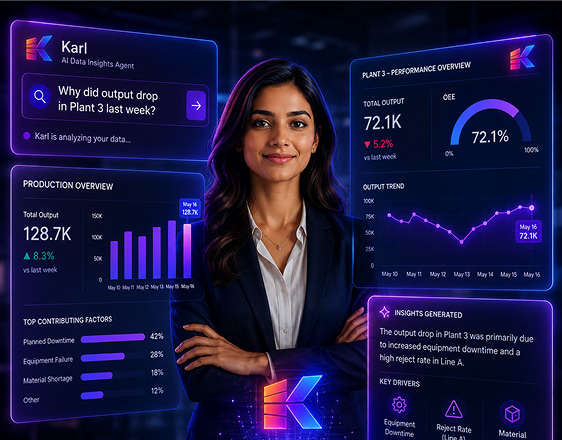
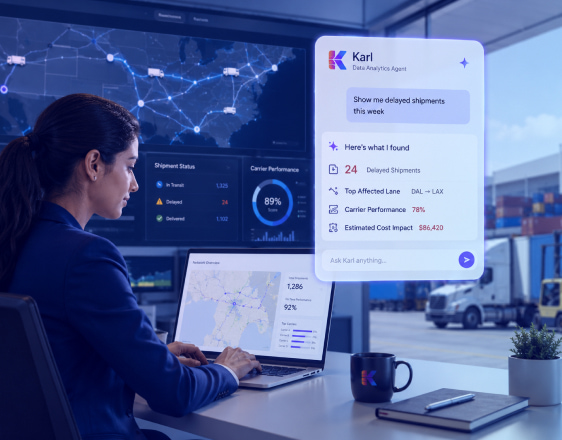
Karl — Data Analytics Agent
Query shipment performance, carrier metrics, and lane data in plain English. Instant answers on delays, costs, and utilization without waiting on analysts.
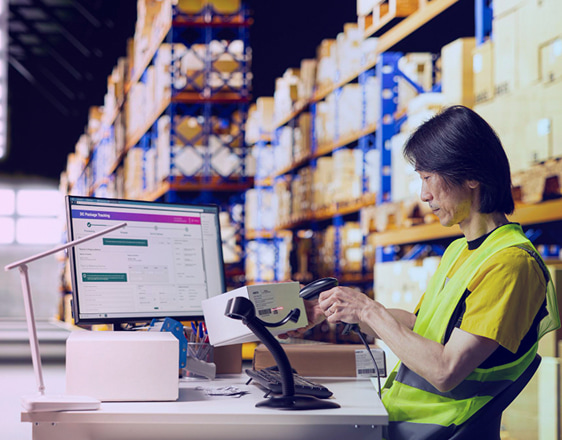
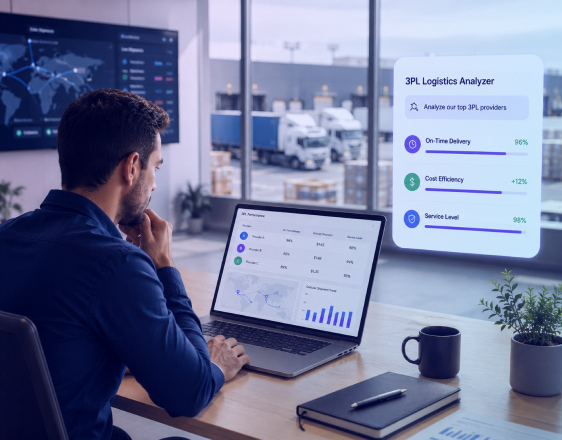
3PL Logistics Analyzer
Analyze third-party logistics performance across cost, delivery accuracy, and service levels. Surfaces patterns better-informed decisions.

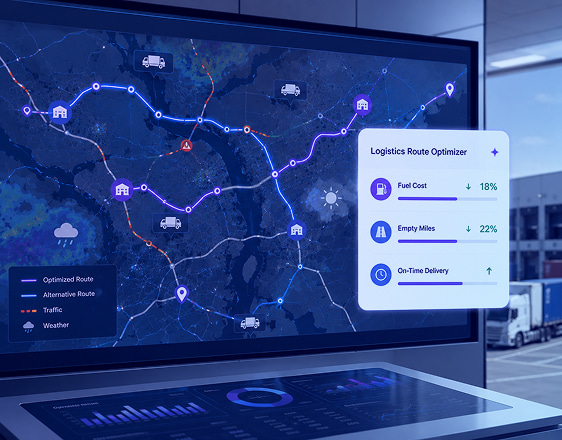
Ogistics Route Optimizer
Optimize delivery routes using live traffic, weather, and capacity data. Reduces fuel costs, cuts empty miles, and keeps shipments on schedule.
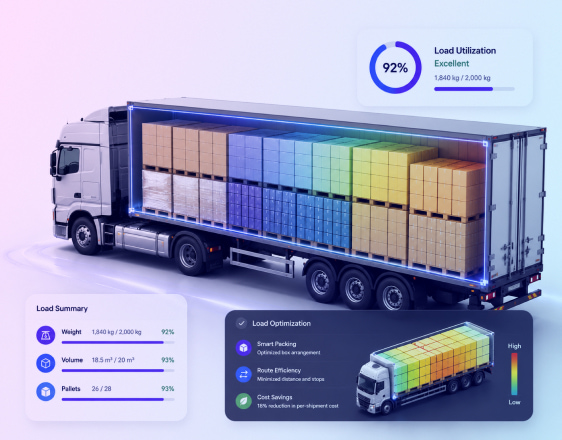
Truck Load Utilization
Maximize load capacity by analyzing weight, volume, and route data. Reduces per-shipment costs and cuts the number of trips needed.
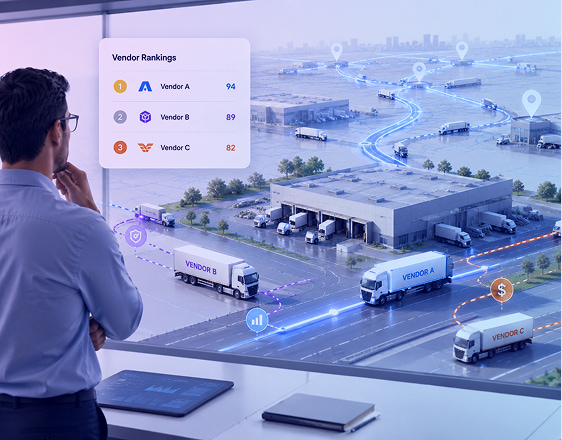
Vendor Advisor
Rank logistics vendors by delivery punctuality, cost efficiency, and satisfaction scores. Configurable parameters let ops teams tailor rankings to their priorities.

Modernize Your Logistics Operations with Our AI
End-to-end AI services built around pharma’s specific constraints: regulatory compliance, complex supply chains, and commercial teams that need answers fast.
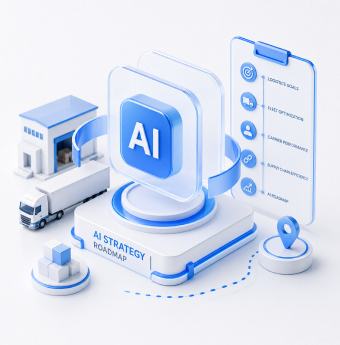
AI Strategy and Advisory
A prioritized AI roadmap tied to your logistics operations, fleet, carrier, and supply chain goals.
Generative AI Solutions
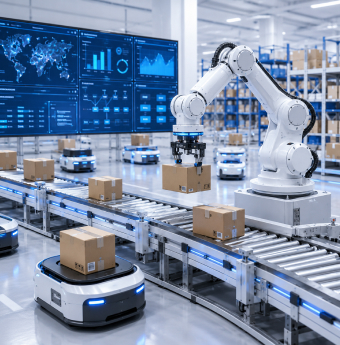
Automate freight documentation, RFQ responses, and supplier communications at scale.

AI Model Development
Demand, pricing, and patient propensity models built on your historical sales and operational data.
AI/ML Ops
Keep logistics models accurate as routes, carrier networks, and demand patterns shift over time.
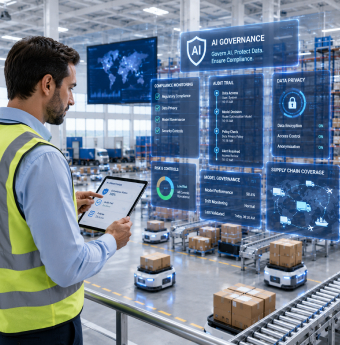
AI Governance
Deploy AI within your compliance, audit, and data privacy requirements without friction to operations.
AI/ML Consulting
Custom models for carrier performance, demand forecasting, and cost-per-lane optimization.

Why Pharma Companies Choose Kanerika for AI
Pharma-Trained AI Models
Built on production, commercial, and regulatory data, not generic life sciences templates.
Agentic AI Expertise
Deploy agents that act on demand shifts, pricing signals, and compliance triggers without manual intervention.
Compliance-First by Design
deployment includes audit trails, access controls, and explainability to meet GMP, FDA, and regulatory requirements.
Proven Business Outcomes
Real improvements in forecast accuracy, pricing margin, and audit response times, not proof-of-concept pilots.
What Global Logistics Firms Say About Our AI
“Route planning used to take our team hours. Now it runs overnight and our fuel costs are down 18% since we deployed.”
Head of Fleet Operations
3PL Provider
VP of Logistics
Consumer Goods Distributor
“Vendor selection was gut feel and spreadsheets. The Vendor Advisor gave us a scoring model our whole team trusts.”
Director of Procurement
Freight Forwarder
“Compliance documentation used to hold up our customs clearance. Kanerika’s AI cut that process from days to under an hour.”
Head of Trade Compliance
Global Logistics Firm
Frequently Asked Questions (FAQs)
01What is AI in logistics and how does it improve supply chain operations?
AI in logistics applies machine learning, predictive analytics, and intelligent automation to route optimization, demand forecasting, inventory management, carrier selection, and freight operations. Unlike manual planning, AI models process real-time shipment data, carrier performance metrics, and lane history to surface recommendations your teams can act on immediately. Logistics organizations using AI in supply chain operations report measurable reductions in fuel costs, empty miles, delivery delays, and administrative overhead across fleet and warehouse teams.
02How does AI route optimization reduce transportation costs for logistics companies?
AI route optimization analyzes live traffic, weather conditions, delivery windows, vehicle capacity, and driver constraints to calculate the most efficient delivery paths dynamically. Unlike static route planning, AI adjusts in real time when disruptions occur. Logistics providers using AI-powered route optimization report 15 to 25 percent reductions in transportation costs, significant fuel savings, and measurable improvements in on-time delivery rates. The compounding effect of optimized routing also reduces vehicle wear, overtime costs, and failed delivery attempts across high-volume operations.
03How does AI improve truck load utilization and reduce empty miles in freight operations?
Load-matching optimization to reduce empty return trips and improve vehicle utilization. Rather than relying on manual load planning, AI identifies consolidation opportunities, flags underloaded vehicles, and recommends load combinations that reduce cost per shipment. Freight operators using AI-driven load optimization report fewer trips needed to move the same volume, lower fuel spend per delivery, and significant reductions in empty miles across short-haul and long-haul routes.
04What is a 3PL analytics tool and how does it help logistics managers evaluate providers?
A 3PL analytics tool aggregates performance data across third-party logistics providers and surfaces benchmarks across delivery accuracy, cost efficiency, damage rates, and service consistency. Rather than reviewing providers manually through disconnected reports, logistics managers get a unified view of provider performance by lane, region, and shipment type. AI-powered 3PL analysis identifies underperforming providers before they impact service levels, supports contract negotiations with data, and helps operations teams make faster, more defensible sourcing decisions.
05How does AI-powered demand forecasting work for logistics and freight planning?
AI demand forecasting for logistics analyzes historical shipment volumes, seasonal patterns, customer order cycles, and external signals to predict freight demand at the lane, carrier, and depot level. Unlike spreadsheet models, AI accounts for multiple variables simultaneously and adjusts as market conditions change. Logistics teams using AI demand forecasting report better carrier capacity planning, fewer last-minute spot market purchases, reduced inventory holding costs, and stronger alignment between inbound freight demand and available fleet and warehouse capacity.
06Can AI help logistics companies speed up freight documentation and customs compliance?
Yes. AI document intelligence tools retrieve cited answers from freight contracts, customs documentation, carrier agreements, and compliance policies in seconds. Instead of manually searching across filing systems and portals, compliance and operations teams get accurate, sourced responses in minutes. Logistics organizations using AI for document retrieval report significantly faster customs clearance, reduced audit preparation time, and fewer delays caused by missing or misinterpreted contract terms across cross-border shipments.
07How does AI vendor selection work for logistics and maritime transportation?
AI vendor selection for logistics scores and ranks carriers and service providers based on configurable parameters including delivery punctuality, cost efficiency, customer satisfaction scores, and route coverage. Rather than relying on relationship-driven or gut-feel decisions, procurement and operations teams work from data-backed rankings that reflect actual performance. AI vendor advisory tools allow teams to adjust weighting criteria based on shipment type, origin, destination, and priority so rankings stay relevant to specific operational requirements.
08How long does it take to deploy AI solutions in a logistics environment?
Deployment timelines vary by solution type. Agent-based tools like Karl and DokGPT typically go live within two to four weeks once data sources and integrations are configured. Route optimization and load utilization models generally take three to five weeks depending on data quality and the complexity of your network. Vendor scoring and 3PL analytics tools deploy in two to four weeks for most operations. Most logistics organizations see measurable outcomes within the first full operational cycle after go-live.
09Can logistics AI integrate with existing TMS, WMS, and ERP systems?
Yes. Logistics AI solutions are built to work within your existing technology stack rather than replace it. Common integrations include SAP TM, Oracle Transportation Management, Manhattan Associates WMS, Microsoft Dynamics 365, and major freight management platforms. As a Microsoft Solutions Partner for Data and AI, Kanerika connects logistics data sources to Microsoft Fabric, Azure, and Snowflake for unified analytics and agent deployment. Integration planning and data readiness assessment are standard parts of every initial discovery engagement.
10Which logistics organizations benefit most from AI in supply chain and freight operations?
AI in logistics delivers the strongest outcomes for organizations managing high shipment volumes, complex carrier networks, or persistent inefficiencies in route planning, load utilization, and vendor performance. Third-party logistics providers, regional trucking companies, freight forwarders, maritime operators, and multi-site distribution networks all see measurable improvements in fuel costs, delivery reliability, compliance speed, and operational visibility. Organizations with fragmented TMS data or manual planning workflows typically see the fastest and largest impact from AI deployment across their supply chain operations.