Financial Forecasting AI Agent for Real-Time Business Decisions
Predict revenue, margin, and cost outcomes with an AI financial forecasting agent that models scenarios and identifies key performance levers.
Forecast Accuracy
Faster Scenario Planning
Less Manual Forecasting





Enterprise Challenges
Financial Planning Challenges That Limit Agility
Disconnected data, static models, and manual forecasting make it harder to respond when business conditions change.

Complex Scenario Planning
Multiple variables make it difficult to compare financial paths quickly.

Limited Margin Visibility
Teams lack clarity on which factors impact financial outcomes.

Slow Forecasting Cycles
Manual models take days to update when assumptions change.
AI Agent for Smarter Financial Forecasting
The AI agent for financial forecasting combines revenue data, cost drivers, and business assumptions to predict outcomes and identify actions that improve financial performance.
Goal-Based Forecast Modeling
The agent takes revenue or margin targets and identifies the drivers needed to achieve them.
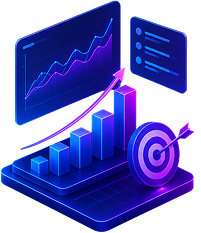
Rolling Forecast Intelligence
The agent continuously updates projections as actual performance changes.
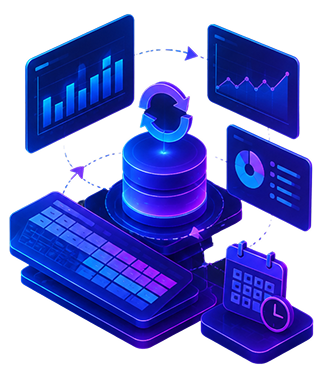
Real-Time Scenario Analysis
Adjust sales, costs, and discounts to see financial impact instantly.
AI-Ranked Recommendations
The agent prioritizes the highest-impact actions with confidence-based recommendations.
See Our Financial Forecasting AI Agent in Action
See how the AI agent models financial scenarios, identifies key drivers, and helps leaders make faster planning decisions.
Enterprise Applications of the Financial Forecasting AI Agent
Apply the AI agent across forecasting, budgeting, and strategic decision workflows.
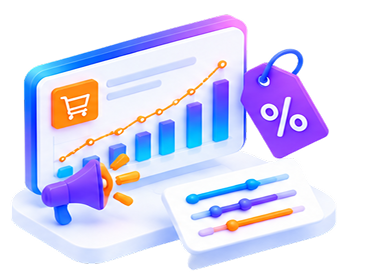
Model Revenue Scenarios
Evaluate how sales volume, pricing, and market changes impact revenue.
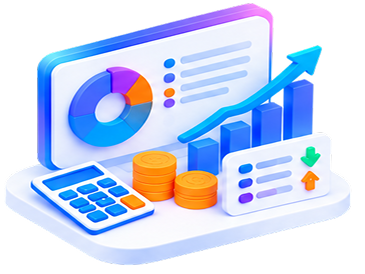
Optimize Cost Planning
Analyze cost structures and identify opportunities to improve margins.
Evaluate Promotions
Predict the financial impact of pricing and promotional decisions.
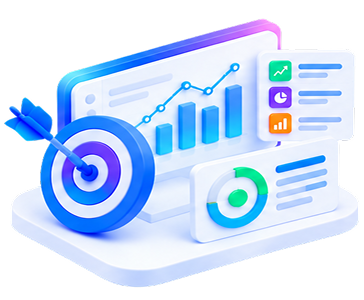
Track Financial Targets
Monitor variance against revenue, margin, and profit objectives.
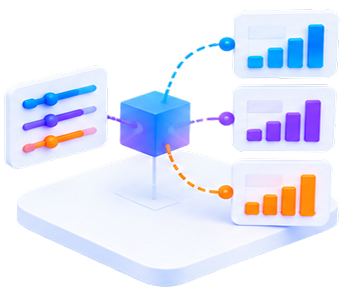
Run What-If Analysis
Compare multiple financial scenarios before committing resources.
Align Business Planning
Bring finance, sales, and operations onto one shared forecast.
Measurable Impact of the Financial Forecasting AI Agent
Improve forecast accuracy, planning speed, and decision confidence with an AI agent for finance teams.
Higher Forecast Accuracy
Reduce variance between projected and actual financial outcomes.
Faster Planning Cycles
Complete forecasting and scenario analysis in less time.
Better Financial Decisions
Identify the highest-impact actions behind business goals.
Improved Target Achievement
Increase confidence in reaching revenue and margin objectives.
Greater Analyst Efficiency
Reduce manual modeling and focus on strategic analysis.
Stronger Business Alignment
Create one shared view across finance and operations.
What Global Financial Leaders Say About Our AI Agent
“AI consolidated forecasts across teams into one model and helped us achieve our margin target.”
CFO
Mid-Market Manufacturing Company
“Scenario modeling changed how we evaluate promotions. We now understand margin impact before campaigns launch.”
VP of Finance
Consumer Retail Brand
“Our FP&A cycle moved from two weeks to two days. AI helps identify issues before quarter-end.”
Director of Financial Planning
B2B SaaS Company
“Our plant managers spent hours waiting for reports. Kanerika’s AI, Karl, gave them instant access to production data.“
Head of Manufacturing Operations
Pharma Company
An AI Agent Built for Enterprise Financial Forecasting
Target-Based Planning
Start with financial goals and identify the actions required to reach them.
Dynamic Scenario Modeling
Adjust sales, costs, and assumptions without rebuilding models.
Explainable AI Recommendations
Understand which factors drive every recommendation.
Tailored for Finance Teams
Run forecasts and scenarios without data science dependency.
See how a financial forecasting AI agent maximizes your ROI
Contact the experts at Kanerika.

Frequently Asked Questions (FAQs)
What is a financial forecasting AI agent?
A financial forecasting AI agent uses machine learning to analyze historical financial data, revenue patterns, cost trends, and operational inputs to predict future business outcomes. Unlike static spreadsheet models, the agent continuously evaluates multiple variables, updates forecasts as new actuals become available, and recommends actions. Finance teams use it to improve revenue planning, margin forecasting, budgeting, and strategic decision-making.
How is a financial forecasting AI agent different from a standalone forecasting model?
A standalone forecasting model returns a prediction when someone runs it, and a spreadsheet shows only what was entered into it. A financial forecasting AI agent works toward a goal. It pulls current actuals, updates the forecast, models scenarios, and ranks the actions most likely to reach your revenue or margin targets. Your finance team stays in control of the final decision.
How does an AI agent improve financial forecasting accuracy?
An AI agent improves forecasting accuracy by analyzing more variables than traditional manual models can process. It evaluates historical revenue, costs, seasonal patterns, pricing changes, and operational factors to identify trends and relationships. As actual performance data enters the system, the agent recalibrates forecasts using predictive analytics and reduces variance between projected and actual financial outcomes over time.
How does an AI agent support scenario planning and financial planning?
An AI agent lets finance teams test different assumptions before making business decisions. Teams can adjust revenue targets, sales volume, costs, discounts, and promotions to understand potential financial outcomes. Instead of rebuilding spreadsheets for every scenario, the agent quickly compares multiple possibilities and shows how each change affects revenue, margin, and profitability.
What data does a financial forecasting AI agent need?
A financial forecasting AI agent typically uses historical revenue data, cost information, pricing inputs, actual financial results, operational metrics, and business assumptions. Additional inputs such as sales forecasts, promotion plans, and market factors can improve projections. The agent connects with existing ERP, accounting, and business systems to reduce manual data collection and maintain updated forecasts.
How is an AI agent different from traditional FP&A tools?
Traditional FP&A tools often focus on reporting current performance and tracking trends. An AI agent goes further by analyzing multiple variables, predicting future outcomes, and recommending actions based on business goals. It can work backward from revenue or margin targets to identify the sales, pricing, and cost adjustments required to improve the likelihood of achieving those objectives.
Can the AI agent support rolling forecasts?
Yes. The agent supports rolling forecasts by continuously updating projections as new actual performance data becomes available. Instead of relying on fixed annual budgets, finance teams maintain an updated view of future revenue, costs, and margins. This helps identify performance gaps and variances earlier and allows businesses to adjust plans based on current conditions.
Can the AI agent integrate with ERP and finance systems?
Yes. The agent can connect with ERP, accounting, and financial systems through APIs and supported integrations. This allows actual revenue, cost, and operational data to flow into forecasting models automatically. Integration requirements depend on existing systems and data structures, but the goal is to reduce manual data preparation and maintain current financial projections.
Can an AI agent replace spreadsheet-based financial planning?
An AI agent can reduce dependency on spreadsheet-based planning by combining revenue forecasting, cost modeling, scenario analysis, and variance tracking in one system. Finance teams can move away from manually updating multiple spreadsheet versions and work from a shared forecast. The agent handles calculations and recommendations while business users remain responsible for strategic decisions.
How long does it take to implement a financial forecasting AI agent?
Implementation timelines depend on data availability, system integrations, and business requirements. Most deployments involve connecting financial data sources, configuring the agent’s forecasting models, validating historical performance, and enabling users. Organizations can begin seeing planning improvements early, while forecast accuracy continues improving as the agent learns from additional business data and actual outcomes.
What business benefits can a financial forecasting AI agent deliver?
A financial forecasting AI agent can improve forecast accuracy, reduce manual planning effort, accelerate scenario analysis, and provide better visibility into revenue and cost drivers. Organizations can use its insights to make faster decisions around pricing, spending, promotions, and resource allocation. The overall impact depends on business complexity, data quality, and current forecasting processes.
Does the AI agent make financial decisions on its own?
No. The agent analyzes financial data, runs scenarios, and ranks recommended actions with the contributing factors visible, so your team can see why each recommendation is made. Budgets, targets, and spending decisions stay with your finance and business leaders.
How much does a financial forecasting AI agent cost?
Cost depends on the number of data sources and ERP or planning-system integrations in scope, the forecasting models required, and the planning scenarios you want to run. Kanerika scopes the work after a short review of your forecasting process and data, then provides a quote. Contact us to discuss your requirements.