Home Industries AI Healthcare
Your Healthcare Operational Problems Have an AI Fix
Claim denials, administrative overhead, and overstretched teams slow healthcare operations. Our AI solutions take on these problems, lowering operating costs and speeding up operations.
Reduced overhead
Faster decision making
Higher claims accuracy
Better compliance
Get Started with AI Healthcare Solutions












What Healthcare Organizations Lose Without AI
Missed diagnoses, billing errors, slow throughput, and staff burnout compound when operations run without intelligent automation.
Disconnected Clinical Data
Decisions made without a complete view across patient records and operational systems.
Authorization Bottlenecks
Procedures delayed, staff hours lost, and revenue waiting on slow payer decisions.
Delayed Pricing Decisions
Margins impacted when competitor pricing and demand change quickly.
High Insurance Claim Denial Rates
Coding gaps and payer rule mismatches create rework and extra costs.
Increased Team Overhead
Compliance and documentation pull staff away from patient care.
No Real-Time Operational Visibility
Performance reports arrive outdated, too slow to drive decisions.
AI Solutions Designed to Scale Healthcare Operations
Our AI models and agents address the most common healthcare operational challenges. We also build and deploy custom models configured for your workflows and data.
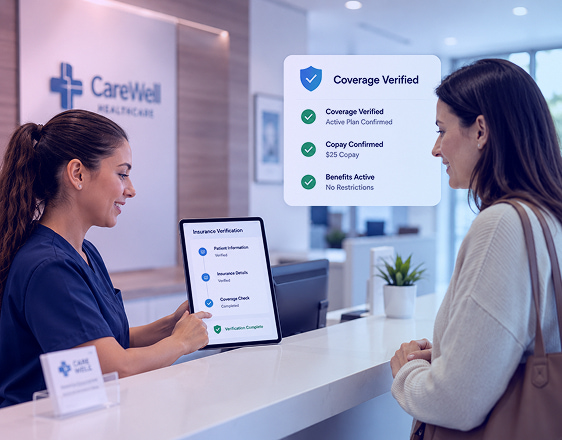
Insurance Coverage Verifier
Verifies coverage, copays, and exclusions at intake before errors become billing disputes.
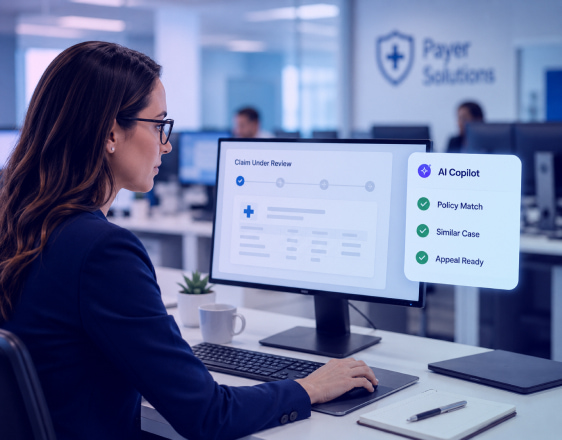
Claims Adjudicator Copilot
Surfaces payer rules, denial history, and precedents at the point of decision to reduce rework and strengthen appeals.
Karl — Data Analytics Agent
Turns denial rates, AR days, and auth approvals into instant, decision-ready answers. Just ask in plain English, right inside Microsoft Fabric.
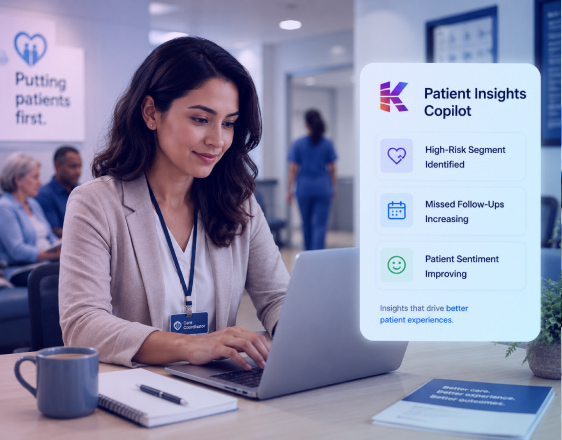
Patient Insights Copilot
Segments patients by visit frequency and care gaps. Surfaces sentiment trends so teams can act on what patients are actually experiencing.

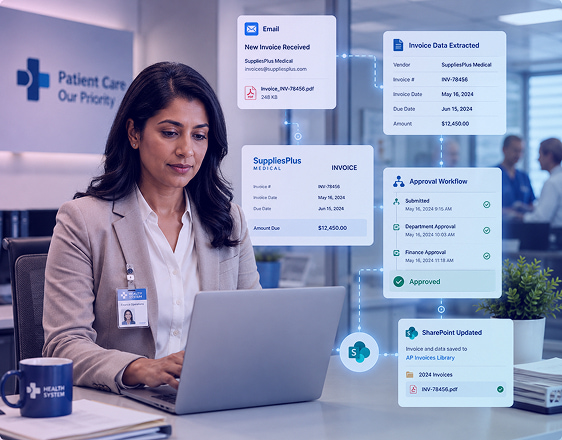
Invoice Automation Agent
Extracts invoice data from email, updates SharePoint, and triggers approval workflows based on your business rules.
AI Services Tailored for Healthcare Operations
Define where AI fits across your revenue cycle, clinical workflows, and compliance operations with a roadmap tied to measurable outcomes.
AI Strategy and Advisory
Define where AI fits across your stores, supply chain, and commercial workflows with a tailored roadmap.
Generative AI Solutions
Automate clinical documentation, payer communications, and internal knowledge retrieval across care and admin teams.

AI Model Development
Denial prediction, patient segmentation, and revenue forecasting models built on your historical claims and operational data.
AI/ML Ops
Keep healthcare AI models accurate as payer rules, coding standards, and patient populations shift over time.

AI Governance
Deploy AI within your HIPAA, payer compliance, and audit requirements without adding friction to clinical or billing operations.

AI/ML Consulting
Map high-value use cases like risk stratification, and payer analytics to your billing setup, then sequence what to tackle first.

Why Healthcare Organizations Choose Kanerika for AI
Healthcare-Trained Models
Built on revenue cycle, clinical ops, and payer data, not generic enterprise templates.
Agentic AI Expertise
Deploy agents that act on eligibility mismatches, claim denials, and approval triggers without manual intervention.
Compliance-First by Design
Every deployment includes audit trails, access controls, and explainability to meet HIPAA and payer compliance requirements.
Proven Implementation Expertise
From model development to agent deployment, we have delivered AI across complex healthcare environments.
What Healthcare Leaders Say About Our AI
Eligibility errors used to show up at billing, weeks too late. Now we catch them at the front desk before the patient leaves.
Revenue Cycle Manager
Multispecialty Clinic
Compliance Director,
Regional Medical Group
We didn’t have a data problem. We had an access problem. AI gave our ops team answers without waiting on anyone
Chief Operating Officer
Multi-Site Provider Network
“Our coders were flying blind on payer rules. Denial rates dropped 32% in the first billing cycle after we deployed.”
VP of Revenue Cycle
Independent Hospital
Frequently Asked Questions (FAQs)
01What is AI in healthcare and how does it improve revenue cycle operations?
AI in healthcare applies machine learning, natural language processing, and intelligent automation to revenue cycle management, claims processing, eligibility verification, and compliance operations. Unlike manual workflows, AI models analyze historical claims data, payer rules, and patient records to surface predictions and recommendations in real time. Healthcare organizations using AI in revenue cycle operations report measurable reductions in denial rates, faster AR collection, and lower administrative overhead across billing and coding teams.
02How does AI reduce claim denial rates for hospitals and medical groups?
AI reduces claim denial rates by analyzing payer-specific rules, denial history, and coding patterns before submission. Rather than discovering errors at the remittance stage, AI flags mismatches upstream so coders can correct them before the claim goes out. Healthcare organizations deploying AI-powered claims adjudication tools report first-pass acceptance improvements within the first billing cycle, with overall denial rates dropping significantly across high-volume payers and complex procedure codes.
03How does AI-powered eligibility verification work in healthcare?
AI eligibility verification checks a patient’s active coverage, benefits, copays, and plan exclusions at the point of intake rather than at billing. The system cross-references payer data in real time and flags mismatches before care is delivered. This prevents eligibility-related denials from surfacing weeks later as billing disputes. Clinics using automated coverage verification at the front desk report significant drops in eligibility-driven denials within the first quarter of deployment.
04Can AI help healthcare organizations speed up payer audit responses?
Yes. AI document intelligence tools retrieve cited answers from payer contracts, billing guidelines, and compliance policies in seconds. Instead of manually searching across multiple systems for weeks, compliance teams get accurate, sourced responses in minutes. Healthcare organizations using AI for audit response have reduced payer audit turnaround from three weeks to two days. The same tools support appeals preparation, contract review, and ongoing compliance monitoring without additional headcount.
05What is a healthcare claims adjudicator copilot and how does it work?
A healthcare claims adjudicator copilot is an AI tool that surfaces similar past claims, payer-specific denial rules, and resolution precedents at the point of adjudication. It gives coders and billing staff the context they need to make faster, more accurate decisions before submission. By identifying patterns across payer, procedure code, and denial reason, the copilot reduces rework, strengthens appeals, and builds institutional knowledge that improves first-pass acceptance rates over time.
06How long does it take to deploy AI solutions in a healthcare environment?
AI improves AR management by giving revenue cycle teams real-time visibility into aging claims by payer, days outstanding, and resubmission status. Instead of reactive follow-up driven by manual spreadsheets, teams work from AI-generated prioritization that surfaces the highest-value claims first. Healthcare providers deploying AI-powered AR tools report reductions in follow-up time and faster cash collection within the first billing cycle, with measurable improvement in net collection rates across payer categories.
07Is healthcare AI compliant with HIPAA and data privacy requirements?
Healthcare AI deployments must be designed with HIPAA compliance, data governance, and audit controls built in from the start. Responsible healthcare AI implementations include role-based access controls, data encryption, audit logging, and explainability frameworks that satisfy both internal compliance requirements and payer audit standards. Kanerika holds ISO 27001 and ISO 27701 certifications, SOC 2 compliance, and CMMI Level 3 maturity, and incorporates these controls as standard components of every healthcare AI engagement.
08How long does it take to deploy AI solutions in a retail environment?
Deployment timelines vary by solution type. Agent-based tools like eligibility verifiers and document intelligence systems typically go live within two to four weeks once data sources and access are configured. Claims adjudication and AR analytics models generally take three to five weeks depending on data quality and payer complexity. Pre-built healthcare AI agents reduce implementation time significantly compared to fully custom builds. Most organizations see measurable outcomes within the first full billing cycle after go-live.
09 Can healthcare AI integrate with existing EHR, PMS, and billing platforms?
Yes. Healthcare AI solutions are built to work within your existing technology stack rather than replace it. Common integrations include Epic, Oracle Health, athenahealth, eClinicalWorks, Kareo, and major clearinghouses. As a Microsoft Solutions Partner for Data and AI, Kanerika connects healthcare data sources to Microsoft Fabric, Azure, and Snowflake for unified analytics and agent deployment. Integration planning and data readiness assessment are standard parts of every initial discovery engagement.
10Which healthcare organizations benefit most from AI in revenue cycle management?
AI in revenue cycle management delivers the strongest outcomes for organizations managing high claim volumes, complex payer mixes, or persistent denial rates above industry benchmarks. Multispecialty clinics, independent hospitals, regional medical groups, and multi-site provider networks all see measurable improvements in eligibility verification accuracy, first-pass claim acceptance, audit response speed, and AR collection rates. Organizations with fragmented billing systems or manual follow-up workflows typically see the fastest and largest impact from AI deployment.