
Custom RAG Development Services for Enterprise AI
Off-the-shelf LLMs do not know your contracts, processes, or customers. Kanerika builds RAG systems that ground every answer in your own data, so your AI gives accurate responses. Our RAG development services and solutions retrieve from SharePoint, file shares, PDFs, and scanned documents with citations and permissions intact.
Efficiency gain from AI
Faster time-to-market
AI projects delivered
Get Started with RAG Development Solutions












Custom RAG Solutions Built on Your Data
We design the retrieval, ranking, and grounding systems that turn a base model into an enterprise application.
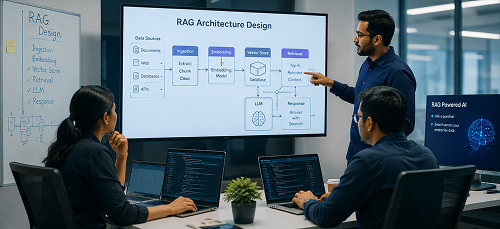
RAG Architecture Design
- Design retrieval flows around real user queries
- Select embedding models for enterprise data needs
- Architect hybrid search across structured and unstructured data
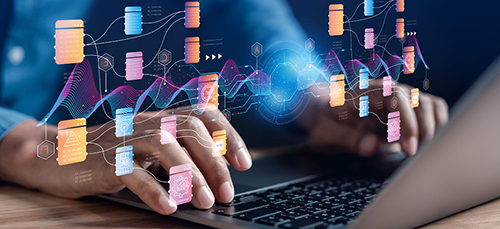
Data Ingestion Pipelines
- Connect structured and unstructured data sources
- Chunk and prepare documents for accurate retrieval
- Maintain pipelines for continuous content updates

Retrieval Engineering
- Configure vector databases for enterprise scale
- Tune relevance through hybrid search and reranking
- Optimize retrieval accuracy across real user queries
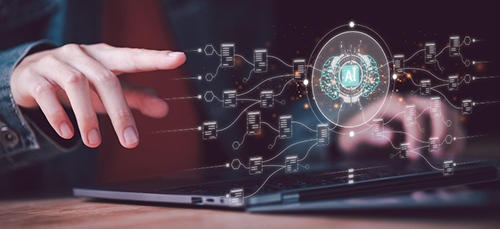
LLM Orchestration Layer
- Integrate open-source and commercial foundation models
- Design prompts and orchestration for grounded responses
- Coordinate retrieval, reasoning, and tool-use layers

Evaluation & Guardrails
- Measure retrieval and answer quality continuously
- Detect hallucinations before responses reach users
- Apply policy guardrails on all the sensitive topics

Deployment & Oversight
- Deploy RAG to cloud or on-premise environments
- Monitor accuracy, latency, and retrieval performance
- Maintain systems with retraining and tuning cycles
RAG Implementation Services: From Data to Production
We build RAG-powered AI systems that connect business knowledge with scalable retrieval and response workflows. Our RAG AI development services score every version on retrieval quality and answer accuracy against a test set of real questions before go-live.
Data Preparation
- Consolidate all knowledge sources
- Clean and structure business data
- Create searchable vector embeddings
Retrieval Engineering
- Build semantic search pipelines
- Configure intelligent document retrieval
- Optimize contextual response accuracy
AI Integration
- Connect retrieval with LLM workflows
- Enable context-aware AI responses
- Deploy scalable enterprise AI applications
Systems We Connect RAG To
We connect retrieval to the systems your teams already use, keeping every permission intact.
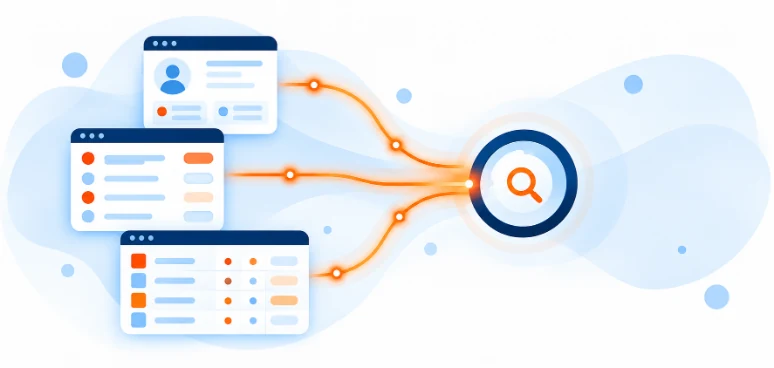
SharePoint, file shares, PDFs, and scanned documents are retrieved with citations and your source permissions intact.
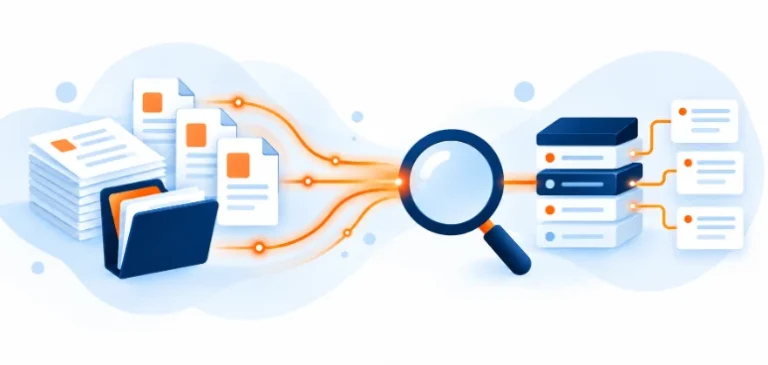
Salesforce, ServiceNow, and SAP connect through APIs, so answers draw on customer, ticket, and order data.
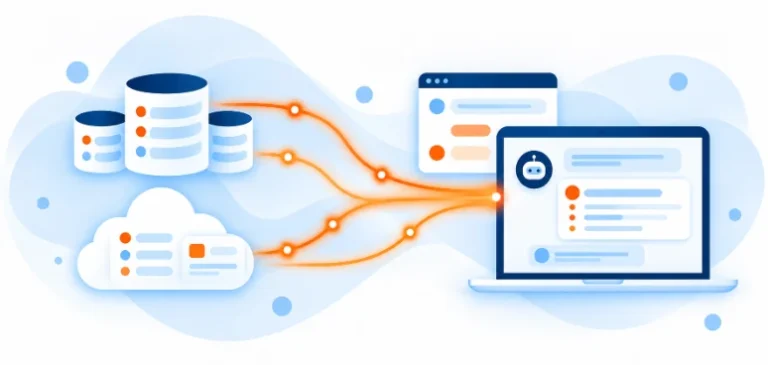
Fabric, Synapse, and SQL Server feed retrieval, while answers surface in Microsoft Teams and internal applications.
How a RAG Engagement Runs
A phased path from pilot to production, modeled on how Kanerika runs KlarityIQ and Karl today. RAG development consulting starts with a 4 to 6 week advisory phase that produces a production blueprint and effort estimate before the build.
Pilot
- Start with one use case
- Connect one priority data source
- Test accuracy on real questions
Production Build
- Add sources with permission-aware retrieval
- Show citations on every answer
- Run evaluation checks on changes
Run and Improve
- Keep the index continuously fresh
- Track answer quality over time
- Tune retrieval as usage grows
RAG Development Case Studies
See how RAG helps organizations operationalize AI with trusted data.
43% Faster Document Retrieval for an Investment Bank
Impact:
- 43% Faster information retrieval
- 100% Role-based compliance achieved
- 35% Higher workforce efficiency
60% Faster Brand Approvals with Conversational AI
Impact:
- 35% Higher Brand Compliance Rate
- 60% Lower Approval Turnaround Time
- 70% Less Manual Effort Per Brand Query
80% Ticket Auto-Resolution with LLM-Driven AI
Impact:
- 80% Auto-response of tickets
- 70% Reduced cost of staffing
- 50% Decrease in ticket resolution time
Tools and Technologies
Built using modern AI, vector search, cloud, and enterprise data technologies. RAG development sits within our wider generative AI services and LLM development services.







RAG Solutions by Industry




Why Choose Kanerika for RAG Development Services?
Kanerika builds production-ready RAG systems grounded in your enterprise data, secured for regulated industries
Kanerika has built and deployed enterprise RAG-powered AI, including KlarityIQ (formerly DokGPT) and Karl, both running in production today.

Kanerika’s RAG builds connect to your existing enterprise data sources, including Fabric, Synapse, and SQL platforms.

Role-based access, audit trails, and data masking are part of the data architecture from day one, not retrofitted later.

Empowering Alliances
Our Strategic Partnerships
The pivotal partnerships with technology leaders that amplify our capabilities, ensuring you benefit from the most advanced and reliable solutions.



Frequently Asked Questions (FAQs)
What is RAG and how is it different from standard LLM implementation?
Standard LLM integration uses the model’s baked-in training knowledge — static, potentially outdated, with no access to your internal data. RAG retrieves relevant content from your documents or databases at query time and feeds it to the model as context. The model generates a response grounded in what your organization actually knows, with citations traceable to specific source documents. See how the two compare in our RAG vs LLM guide.
When should we use RAG instead of fine-tuning?
Use RAG when your data changes frequently, when compliance requires source traceability, or when document volume is large. Use fine-tuning when you need the model to adopt a specific tone or domain vocabulary and the underlying data is relatively static. Many enterprise production systems combine both. Our RAG vs fine-tuning guide compares the two in detail.
How long does a RAG engagement take?
A focused use case — single document type, defined query scope — typically takes 8 to 12 weeks from architecture through production deployment. Multi-source, cross-system, or regulated-industry deployments run 3 to 6 months. Kanerika’s advisory phase (4 to 6 weeks) produces a production blueprint and effort estimate before the build starts.
How does Kanerika handle data security in RAG deployments?
Role-based access controls are built into the retrieval layer — users only retrieve what they’re authorized to see. Every retrieval event is logged for audit. PII detection and redaction happens before document ingestion via Susan, our AI agent for PII redaction. Azure deployments run within your existing Microsoft security perimeter with private endpoint configuration.
Can the RAG system integrate with Microsoft Teams or existing enterprise apps?
Yes. KlarityIQ deploys via Microsoft Teams and WhatsApp. Custom RAG systems expose retrieval capabilities as APIs consumable by Salesforce, ServiceNow, SAP, SharePoint, or any API-connected enterprise application.
How do you keep the RAG system accurate as documents change?
Incremental indexing pipelines update the vector index as source documents change — no full re-indexing required for most updates. We also implement retrieval freshness scoring and configure document expiry rules for time-sensitive content. Post-deployment monitoring tracks retrieval drift and triggers alerts when accuracy degrades.
What does RAG development cost?
Cost depends on the number of data sources, how messy the documents are, permission requirements, and the accuracy bar for go-live. A pilot on one use case is the cheapest way to get a reliable estimate before committing to the full build and its ongoing maintenance.
How do you measure RAG answer quality before go-live?
Before building, we agree on a test set of real questions with known answers. Every version is scored on retrieval quality and answer accuracy against that set before anything reaches users, and every answer cites its source document so reviewers can check it quickly.
Which models and vector databases can you work with?
We integrate open-source and commercial foundation models and configure vector databases for enterprise scale. Model choice depends on accuracy, latency, cost, and data residency, and we validate it against your own test questions before the system goes live, so the final stack fits your security requirements.
Do you offer RAG as a service?
Yes. We build the system and then run it with you. After the production build, our Run and Improve phase keeps the index fresh as documents change, tracks answer quality and tunes retrieval as usage grows. You can deploy in your own cloud tenant or an on-premise environment. We run RAG in production today, including KlarityIQ and Karl.
What does a production RAG architecture include?
A production RAG system wraps the language model in five working layers: data ingestion and chunking, embeddings in a vector database, hybrid retrieval with reranking, an orchestration layer that assembles the prompt, and evaluation with guardrails. Deployment and monitoring keep it reliable after launch. Our guide to RAG architecture shows how the layers fit together, and our RAG development services cover each one.
How do you choose an embedding model for RAG?
We choose the embedding model by testing it on your own documents and test questions. The deciding factors are retrieval accuracy on your content, language and domain coverage, latency and cost. The embedding stage of our RAG pipeline guide explains the trade-offs in more detail.
Do you use hybrid search and reranking in RAG?
Yes. Hybrid search combines keyword and vector matching, so exact terms such as part numbers or clause IDs still match while meaning-based search finds paraphrases. Reranking then re-scores the top results before they reach the model. We tune both to your real queries as part of retrieval engineering. Our guide to advanced RAG techniques covers hybrid search and reranking.
How do you chunk documents for RAG?
We chunk for retrieval, not for storage. Documents are split so each passage makes sense on its own, then we test chunk size against your real questions and adjust until the right passage comes back. Scans and tables take more preparation than clean text. The chunking stage of our stage-by-stage RAG pipeline guide goes deeper.
What are the most common enterprise RAG use cases?
Common enterprise uses include knowledge search across manuals and policies, customer and ticket support grounded in your own data, regulatory and compliance Q&A, and document retrieval for analysts. We have built RAG for document retrieval at an investment bank and for LLM-driven ticket response. Our guide to RAG applications covers the main types.
What is agentic RAG, and can you build it?
Agentic RAG lets an AI agent decide what to retrieve, when to retrieve it and which tools to use, instead of running one fixed search per question. It builds on a solid RAG foundation, so grounded retrieval, citations and evaluation come first. We extend production RAG systems with agent workflows through our agentic AI development services. Our guide to agentic RAG explains the patterns.
Deploy Context-Aware AI with RAG
Partner with Kanerika to build enterprise-grade RAG applications .