THE PROBLEM
Pricing Challenges That Impact Revenue and Margins
Manual pricing processes and disconnected market data make it difficult to respond quickly to demand changes and competitive shifts.
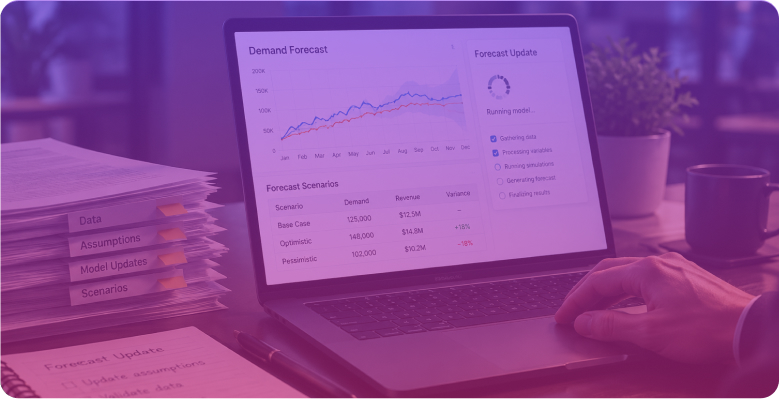
Slow Pricing Cycles
Spreadsheet-based analysis delays price evaluation across products and markets.
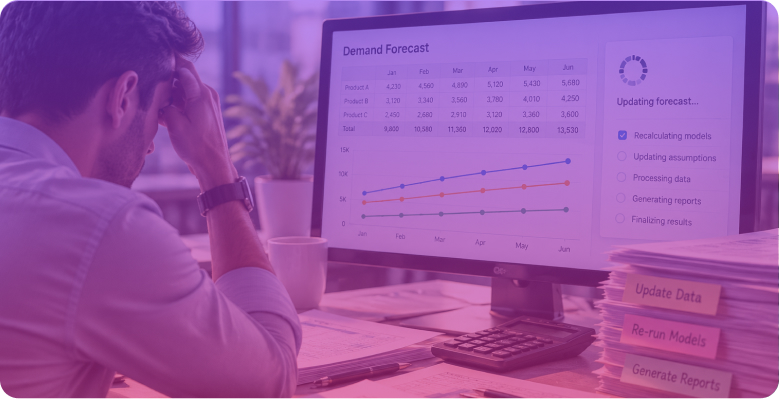
Limited Margin Visibility
Teams lack clear demand and profitability insights before changing prices.

Complex Pricing Decisions
Multiple product, market, and competitor variables make optimization difficult.
AI-Powered Pricing Intelligence for Dynamic Markets
Smart Pricing AI combines demand forecasting, competitor analysis, and dynamic optimization to recommend better pricing strategies.
Demand-Based Price Forecasting
Predict sales impact across different price points and time periods.
Revenue Impact Prediction
Forecast quantity sold and revenue before implementing price changes.

AI-Recommended Pricing Strategies
Compare pricing scenarios ranked by revenue and margin impact.
Competitor Pricing Intelligence
Track market changes and adjust pricing strategies proactively.
Core Functionality
Where AI Improves Product Pricing Decisions
Apply AI across product pricing, market analysis, and revenue planning workflows.
1
Optimize Product Pricing
Identify price points that balance demand, revenue, and margin goals.
2
Evaluate Pricing Scenarios
Compare premium, intermediate, and value-based strategies before implementation.
3
Monitor Competitor Pricing
Track competitor movements and adjust pricing strategies faster.
4
Forecast Demand Impact
Predict sales volume changes before committing to price updates.

5
Support Market Expansion
Analyze pricing opportunities across products, regions, and customer segments.
6
Improve Pricing Governance
Maintain transparent records behind every pricing recommendation.
Business Value
The Business Value of Smarter Product Pricing
Improve pricing speed, revenue performance, and decision confidence with AI.
Faster Pricing Decisions
Evaluate multiple pricing configurations within shorter planning cycles.
Higher Revenue Potential
Identify price points that maximize revenue and margin outcomes.
Better Competitive Response
React faster to competitor movements and market changes.
Complete Decision Auditability
Maintain traceable pricing recommendations with clear model reasoning.
Improved Team Productivity
Reduce manual analysis and focus teams on pricing strategy.
More Accurate Revenue Forecasts
Predict demand changes with price-based sales projections.
Hear from Organisations Using Smart Pricing AI
“AI optimized margins, accelerated price changes, and provided transparency across luxury product pricing decisions.”
VP of Pricing
Luxury Retail Enterprise
“Pricing scenarios that took hours now take minutes. The model evaluates competitor data and provides actionable recommendations quickly.”
Head of Commercial Strategy
FMCG Company
“The faster pricing cycle and audit trail improved visibility for finance, compliance, and leadership teams.”
Director of Pricing Operations
Retail Group
Advanced AI for Product Pricing Optimization
Intelligent, Explainable Pricing
Understand every recommendation with confidence scores and decision logic.
Self-Learning Pricing Models
Adapt to demand changes, competitor moves, and market patterns.
Real-Time Scenario Analysis
Test pricing changes and evaluate revenue impact before execution.
Built for Business Users
Enable pricing teams to run analysis without data science expertise.
Improve Revenue Decisions With AI-Powered Pricing
See how AI can help optimize pricing, improve margins, and respond faster to market changes.

Frequently Asked Questions (FAQs)
01What is AI pricing optimization?
AI pricing optimization uses machine learning to analyze demand patterns, competitor pricing, market conditions, and product data to recommend better price points. The goal is to identify pricing strategies that improve revenue and margins while considering customer demand. Smart Pricing AI combines demand forecasting, competitor analysis, and dynamic optimization to provide explainable recommendations with confidence scores and decision tracking.
02How does AI improve pricing decisions?
AI improves pricing decisions by evaluating large combinations of products, markets, price points, and demand patterns faster than manual analysis. It predicts how customers may respond to different prices and shows the expected revenue and margin impact before implementation. This helps pricing teams move from reactive adjustments to data-driven strategies based on demand signals and competitive conditions.
03How does dynamic pricing AI work?
Dynamic pricing AI analyzes historical sales, current demand patterns, competitor prices, and market conditions to recommend optimal price adjustments. The model evaluates different pricing scenarios and predicts expected changes in sales volume and revenue. Businesses can use these insights to adjust pricing based on market shifts while maintaining target margins and revenue objectives.
04What pricing strategies can AI recommend?
AI pricing systems can evaluate multiple pricing strategies, including premium pricing, value-based pricing, and balanced margin-volume approaches. The model compares each option based on projected demand, revenue, and profitability impact. Smart Pricing AI ranks available strategies and provides transparent reasoning behind recommendations, helping businesses choose pricing approaches aligned with their commercial goals.
05How does competitor pricing intelligence work?
Competitor pricing intelligence collects and analyzes competitor price data to identify market movements and pricing trends. AI models can evaluate competitor changes alongside demand patterns and internal pricing data. This helps businesses understand competitive pressure, anticipate market shifts, and adjust pricing strategies before losing revenue opportunities or market position.
06What data does AI pricing optimization need?
AI pricing optimization typically requires historical sales data, product pricing history, cost information, demand patterns, and competitor pricing data. Additional inputs may include customer segments, seasonal trends, product categories, and market information. The quality and availability of this data influence recommendation accuracy and help the model generate more relevant pricing strategies.
07Which industries use AI pricing optimization?
AI pricing optimization is commonly used across industries with complex product portfolios and changing market conditions. Retail, FMCG, automotive, travel, and other consumer-facing businesses use pricing AI to evaluate product-level pricing, demand changes, and competitive positioning. The model is especially valuable where organizations manage many products, markets, or pricing decisions simultaneously.
08Can AI pricing optimization explain its recommendations?
Yes. Modern AI pricing systems can provide explainable recommendations by showing the factors influencing each suggested price. This can include demand signals, competitor data, pricing history, projected revenue impact, and confidence scores. Explainability helps pricing, finance, and leadership teams understand why a recommendation was generated and supports stronger governance.
09How long does AI pricing optimization implementation take?
Implementation timelines depend on existing pricing systems, data availability, and integration requirements. Most deployments involve connecting sales and pricing data, configuring competitor inputs, training models using historical information, and validating recommendations. A typical enterprise implementation can be completed within several weeks once required data sources and workflows are available.
10Does AI pricing optimization require data science expertise?
No. AI pricing optimization platforms are designed for commercial and pricing teams. Users can define products, markets, margin targets, and planning periods while the AI handles forecasting and recommendation logic in the background. This allows business teams to evaluate pricing scenarios and make informed decisions without needing advanced data science skills.