
Custom Software Development in California
Kanerika delivers custom software development in California for enterprises building applications that handle regulated consumer data. Engineered around your workflows, integrated with existing platforms, and designed to satisfy privacy obligations from the first release.
Quicker Time to Market
Lower Engineering Costs
Higher Workflow Efficiency
Get Started with California Custom Software Development Solutions












California Custom Software Development Engagement Models
Every engagement is scoped to your requirements, timeline, and internal capacity. Three models cover everything from a contained build to ongoing ownership.
Statement-of-Work Delivery
- Scope, price, and dates agreed contractually
- Technical decisions rest with our architects
- Right where requirements are already stable
Integrated Delivery Capacity
- Our engineers join your delivery cadence
- You set direction, we uphold standards
- Right where engineering capacity limits progress
Application Support and Evolution
- Scheduled releases against a governed backlog
- Availability and remediation covered by SLA
- Right where downtime carries operational cost
Custom Software Development Services in California
Our custom software development services in California run from technical design through production operation, with privacy, access control, and auditability treated as build requirements from day one.

Scoping and Technical Design
- Operating processes expressed as testable system behavior
- Data inventory established before architecture is fixed
- Phases sequenced with effort and duration ranges

Product and Service Design
- Existing workflows studied before screens are drafted
- Interfaces reducing input error and training overhead
- Consent and preference flows designed as first-class features

Engineering Delivery
- Services, data layer, and clients built together
- Access control enforced at the data boundary
- Components structured for replacement without rebuild

Data and Systems Integration
- Versioned contracts published for downstream consumers
- Event pipelines moving state between disconnected systems
- Field-level lineage maintained across integrated data flows

Assurance and Deployment
- Functional, load, and privacy test coverage combined
- Environments rebuilt from version-controlled definitions
- Promotion blocked until security and coverage gates clear

Ongoing Support
- Severity-tiered response with continuous production monitoring
- Retention and purge jobs verified on schedule
- Backlog shaped by telemetry rather than assumption
Custom Enterprise Software Development Services with Proven Results
See how Kanerika helps enterprises build, modernize, and improve software systems that reduce delays, improve performance, and support long-term growth.
AI/ML & Gen AI
Independent Microsoft Fabric Architecture Review Before a Dynamics 365 Go-Live
Impact:
- ~136 Findings documented before go-live
- ~30 Days estimated for pre-cutover remediation
- 6 Weeks to an independent, evidence-based go/no-go view
AI/ML & Gen AI
Bringing Live QAD ERP Data into Microsoft Fabric with Open Mirroring
Impact:
- 7 QAD data issues resolved before rollout
- 0 Duplicate records when data is reloaded
- 200+ QAD tables connected to Fabric
AI/ML & Gen AI
Detecting Rental Transaction Risk Early with AI-Powered Risk Intelligence
Impact:
- ~500 Risk findings surfaced
- ~1.2M Financial exposure identified
- 6 Risk categories used to classify findings
IMPACT: Our Software Development Methodology
Our custom software development methodology divides each engagement into stages carrying exit conditions, so a phase closes on demonstrated output rather than on elapsed calendar time.
INNOVATE
Custom Software Development for California Industries
We shape each build around the compliance exposure, data volumes, and operating conditions of the industry it serves.



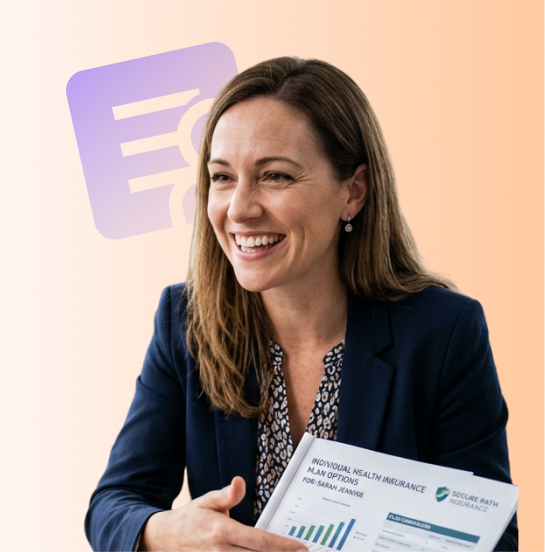




Kanerika: Your Custom Software Development Company in California
Custom software development companies in California differ less on technology than on how quality is enforced, who is assigned, and whether the system runs without them.
Engineers selected on technology certification and prior delivery in comparable technical environments.

Coverage thresholds, review gates, and privacy controls enforced inside the pipeline, not by convention.

Documentation, decision records, and paired delivery so your engineers can extend it alone.

Empowering Alliances
Our Strategic Partnerships
The pivotal partnerships with technology leaders that amplify our capabilities, ensuring you benefit from the most advanced and reliable solutions.



Also from Kanerika: custom software development in Los Angeles, custom software development in San Francisco and custom software development in Seattle. Explore our custom software development services or see all Kanerika locations.
Frequently Asked Questions (FAQs)
How do you build software that meets CCPA and CPRA requirements?
By treating the obligations as functional requirements rather than policy statements. Deletion, access, correction, and opt-out all become working features with defined behavior. That means knowing where every personal data field lives, which requires a data inventory during design rather than an audit afterward. Applications built without that structure cannot satisfy a request they were never designed to handle.
What does privacy by design actually mean in a build?
Collecting only the data a feature genuinely needs, defaulting to the most protective setting, and making retention explicit rather than indefinite. In practice it changes schema design, logging behavior, and test data handling. Most custom software development companies in California will claim it. The test is whether a privacy requirement has ever caused one of their architectural decisions to change.
How are consumer deletion requests handled in custom software?
Through a deletion workflow that reaches every system holding the record, including backups, logs, analytics stores, and downstream integrations. The difficult part is rarely the primary database. It is the six other places the data was copied to. We map those during design, which is why the data inventory matters more than the deletion function itself.
Can custom applications support data subject access requests?
Yes, and building it in costs far less than adding it later. A subject access request requires assembling everything held about one individual across systems, in a readable format, within a statutory window. Organizations handling these manually spend days per request. An application designed for it resolves the same request in minutes, which matters as volumes grow.
How is consent managed across connected systems?
Consent state has to be authoritative in one place and respected everywhere else. When each system stores its own copy, they drift, and a customer who opted out in one channel keeps receiving contact through another. We model consent as a governed attribute with propagation to downstream consumers, rather than a checkbox stored wherever it was captured.
What data should an application avoid collecting?
Anything not required by a defined feature. Data collected speculatively becomes liability with no corresponding value: it has to be secured, retained, disclosed on request, and deleted on demand. Minimization is the cheapest privacy control available, and it is usually the one skipped, because collecting everything feels prudent until the first access request arrives.
How do you handle third-party data sharing and opt-outs?
Every outbound data flow is inventoried, and opt-out state is checked at the point of transmission rather than at collection. The common failure is an integration built before the opt-out requirement existed, which continues sharing regardless. We audit outbound flows during discovery and enforce the check inside the integration layer, so no single system can bypass it.
How do you demonstrate privacy compliance during an audit?
With evidence the system produces automatically: access logs, consent history, request fulfillment records, retention job execution, and data lineage. Compliance demonstrated through screenshots and written assurances does not withstand examination. Designing the application to generate its own audit trail means the evidence exists whether or not anyone anticipated the specific question being asked.
Do you work with companies across California?
Yes. Kanerika works with enterprises across California, with standups, sprint reviews, and release windows scheduled around your business hours. Most collaboration runs remotely, with onsite workshops arranged when discovery or launch planning needs everyone in one room. We also run dedicated engagements for enterprises in Los Angeles and San Francisco.
How do you compare custom software development companies in California?
Ask each one how they establish where personal data lives before designing anything. Ask whether a privacy requirement has ever changed their architecture. Ask who owns the code afterward. Custom software development companies in California that treat consumer data obligations as engineering constraints will describe a specific build where that shaped the technical approach. The rest will describe a policy.