AI-Powered Logistics Cost Optimization
with an AI-powered 3PL Logistics Analyzer built for faster logistics decisions.
Margin improvement
Annual cost savings
Manual hours saved daily
Get Started with AI Logistics Cost Optimization Solutions












Enterprise Challenges
Logistics Pricing Bottlenecks Affecting Margins
Manual cost analysis and pricing decisions limit your ability to respond quickly to market changes.

Slow Pricing Analysis
Teams spend hours comparing carrier rates and building pricing scenarios manually.

Limited Margin Visibility
Fuel surcharges, contract terms, and operating costs can impact profitability of a lane.

Too Many Variables
Routes, service levels, and demand create thousands of possible cost combinations.
Predictive Cost Intelligence for 3PL Operations
01 · Carrier Cost Modeling
Predictive Carrier Cost Modeling
Forecast lane costs using rates, surcharges and contract terms.
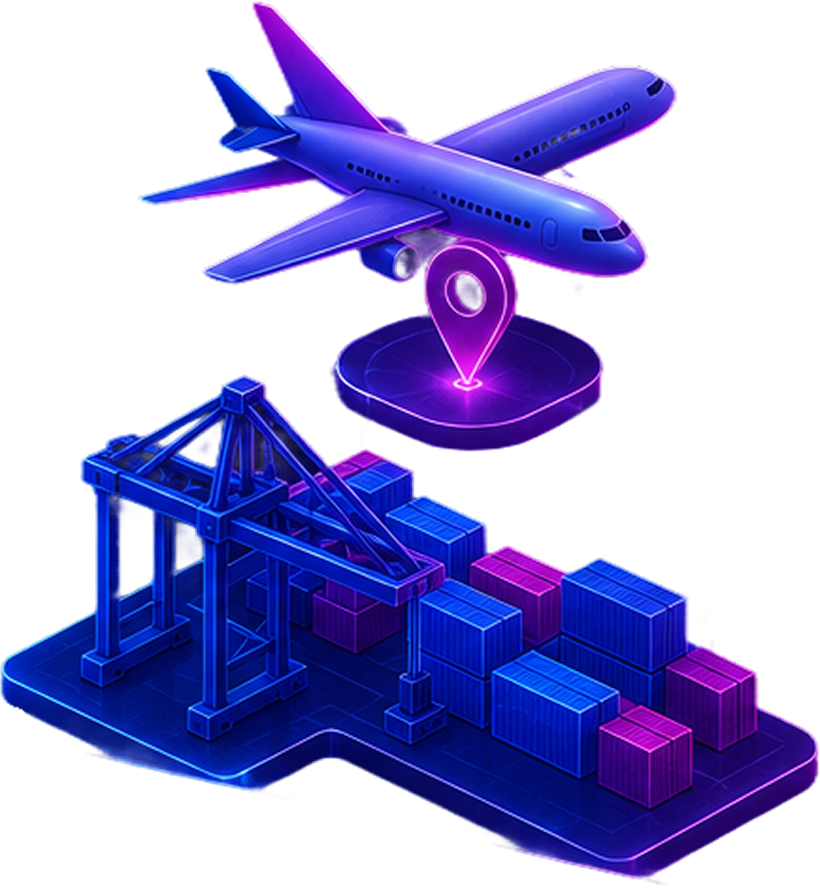
02 · What-If Analysis
Real-Time Scenario Analysis
Test pricing, carrier, and route changes instantly.
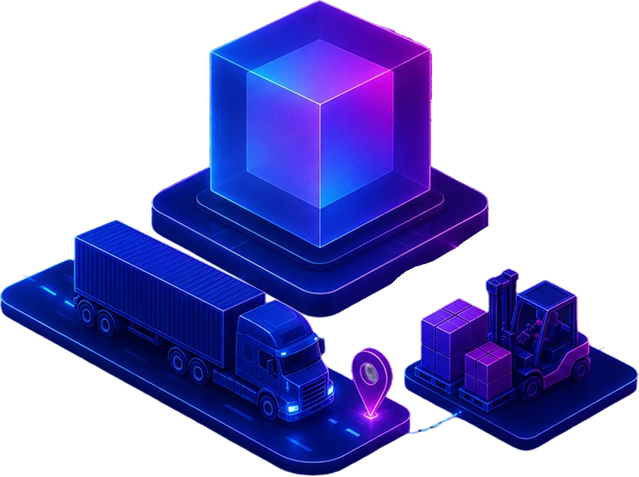
03 · Operating Cost Forecasts
ML-Based Cost Forecasting
Predict fuel, labor, maintenance and equipment costs.
04 · Margin-Ranked Configurations
Configuration Optimization
Rank route, carrier, and equipment combinations by margin.
See Our AI Logistics Cost Analyzer in Action
Watch how AI analyzes carrier costs, models configurations, and surfaces pricing recommendations with full transparency across your logistics network.
Core Functionality
3PL Logistics Analyzer Use Cases
See how teams benefit from AI-driven cost analysis across day-to day logistics decisions
1
Optimize Pricing for New Lanes
Estimate costs, margins, and profitability before quoting rates or committing capacity.
2
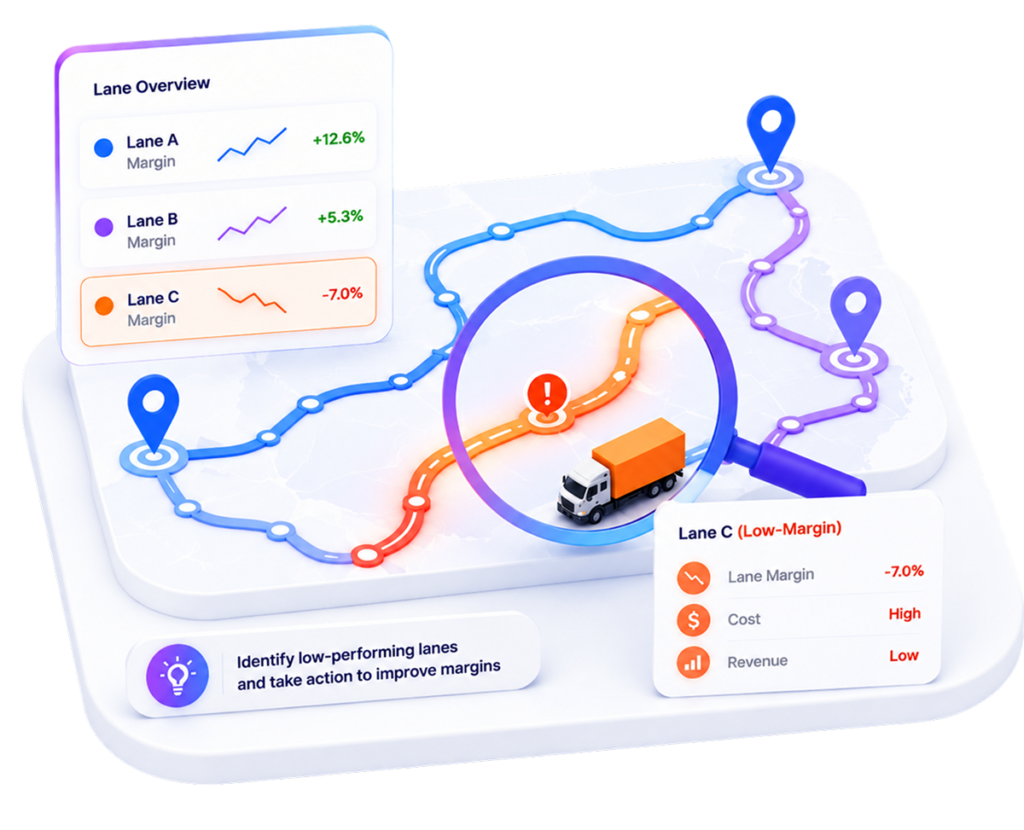
Review Low-Margin Lanes
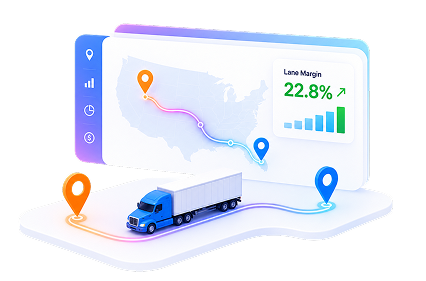
Find lanes where rising costs or accessorials are reducing profitability.
3
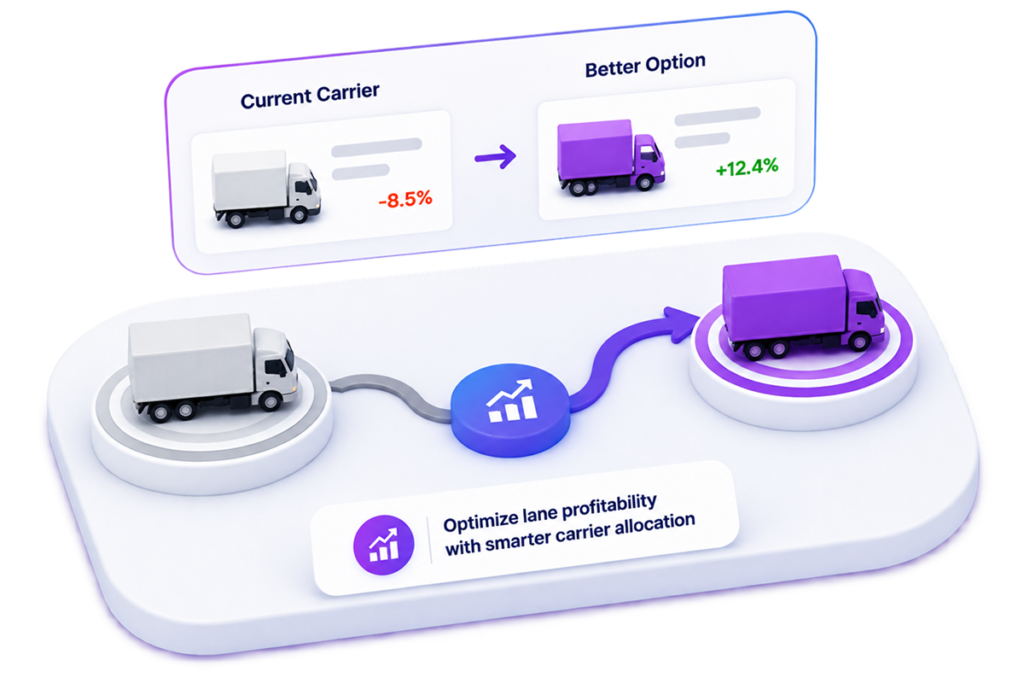
Reallocate Carriers Efficiently
Assess cost, capacity, and service performance before changing assignments.
4
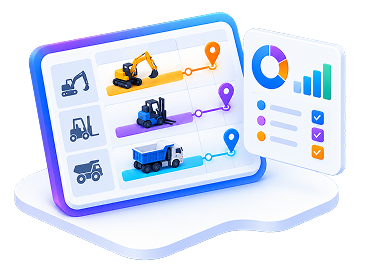
Plan Equipment Strategy
Compare equipment costs and utilization across routes and customer needs.
5
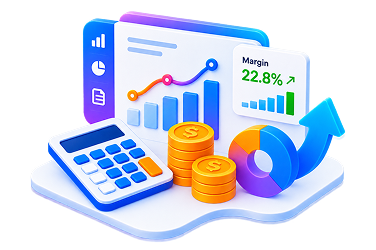
Support Margin Planning
Model expected transportation costs for budgeting and quarterly forecasts.
6
Respond to RFQs Faster
Compare carrier and route options quickly for competitive bids.
Business Value
Measurable Gains Across Pricing and Margins
Turn logistics cost intelligence into faster pricing, stronger margins, and better planning across operations.
Improved Margin Visibility
Track profitability across lanes, carriers, and customer accounts in real time.
Faster Pricing Decisions
Reduce analysis time with rapid carrier, route, and pricing comparisons.
Higher Forecast Accuracy
Improve cost predictions by comparing forecasts with actual performance.
Stronger RFQ Performance
Build more competitive bids with clearer cost and margin estimates.
Higher Operational Efficiency
Reduce manual analysis and repetitive scenario-modeling work across teams.
Quicker Planning Cycles
Speed up forecasting and margin planning with current logistics cost data.
What 3PL Leaders Say about Our AI
Testimonials
“AI exposed margin leakage across long-haul lanes and helped improve margins by 18%.”
CFO
Regional 3PL
“Faster scenario analysis helped us respond to more RFQs and improve win rates by 31%.”
VP of Pricing
National Freight Broker
“Predictive cost modeling gave us earlier visibility into fuel, carrier, and seasonal cost changes.”
Director of Logistics Operations
Food Distribution
Differentiators
AI Built for Faster, Smarter Logistics Decisions
Real-time data connections, self-learning models, and decision-ready outputs, built for pricing and finance teams.
Real-Time Data Integration
Connect live logistics data for faster, more accurate cost decisions.
Self-Learning Models
Improve forecasts using actual performance and logistics patterns.
Actionable Recommendations
Turn complex logistics data into decision-ready pricing recommendations.
Rapid Implementation
Deploy quickly within existing systems without disrupting current operations.
Improve Logistics Pricing Decisions and Margin Planning with AI

Frequently Asked Questions (FAQs)
01What is an AI-powered 3PL Logistics Analyzer?
An AI-powered 3PL Logistics Analyzer uses shipment history, carrier rates, fuel costs, accessorial charges, equipment expenses, and operating data to model the true cost of logistics services. It applies predictive analytics and machine learning to compare lanes, carriers, and pricing scenarios. Logistics, finance, and pricing teams can use these forecasts for 3PL cost analysis, freight cost optimization, lane profitability analysis, and margin planning.
02How can AI reduce logistics and transportation costs?
AI supports logistics cost optimization by analyzing transportation data for expensive lanes, poor carrier allocation, hidden accessorial charges, equipment inefficiencies, and pricing gaps. Predictive models can also estimate how fuel, labor, demand, or carrier rate changes may affect future costs. Teams can then compare possible changes before implementation, helping reduce avoidable freight spend while protecting delivery requirements and target margins.
03How does AI help with 3PL pricing decisions?
AI-based 3PL pricing analytics combines carrier costs, fuel surcharges, equipment expenses, service requirements, historical demand, and margin targets in one pricing model. Instead of manually building separate spreadsheets for every quote or lane, teams can compare multiple pricing scenarios quickly. The analyzer shows expected cost and margin impact, helping pricing teams respond to RFQs faster while maintaining defined profitability targets.
04What data is needed for AI logistics cost optimization?
An AI logistics cost optimization model typically uses shipment history, origin and destination data, carrier contracts, base rates, fuel surcharges, accessorial fees, equipment costs, labor expenses, service levels, and historical operating costs. Additional market and demand data can improve forecasting. The 3PL Logistics Analyzer combines these inputs to model cost-to-serve, predict lane profitability, and compare transportation pricing scenarios.
05Can AI predict freight and carrier costs?
Yes. Predictive freight cost modeling can estimate future transportation costs using historical carrier rates, fuel prices, shipment volumes, lane behavior, equipment costs, seasonal demand, and other operating variables. Machine learning models identify patterns within these datasets and update forecasts as new information becomes available. This helps logistics teams estimate total lane costs and assess potential margin impact before making carrier, routing, or pricing decisions.
06Can the 3PL Logistics Analyzer integrate with our TMS?
Yes. A 3PL Logistics Analyzer can connect with transportation management systems, carrier portals, ERP platforms, rate files, and other logistics data sources through APIs or supported data integrations. This allows carrier rates, shipment history, accessorial costs, and operational data to feed the cost models. The aim is to add predictive logistics analytics to existing operations without requiring teams to replace their core TMS.
07Can the analyzer compare different carriers and transportation modes?
Yes. The analyzer can compare carriers and transportation configurations across truckload, LTL, intermodal, drayage, and multimodal freight when the required operational and pricing data is available. It evaluates variables such as carrier rates, fuel charges, equipment, service requirements, and expected operating costs. Teams can use these comparisons for carrier selection, lane planning, transportation cost analysis, and margin-based routing decisions.
08How does AI identify margin leakage in logistics?
AI can detect logistics margin leakage by comparing expected costs with actual shipment, carrier, surcharge, and accessorial data. It can flag patterns such as consistently unprofitable lanes, unexpected carrier charges, pricing that no longer covers operating costs, or inefficient carrier assignments. Combining contract, shipment, and cost data gives finance and logistics teams a clearer view of where transportation margins are being lost.
09How accurate are AI logistics cost forecasts?
Forecast accuracy depends on data quality, historical coverage, market volatility, and the variables included in the model. A predictive logistics cost model generally improves as it receives more actual shipment and cost outcomes. Rather than relying on a fixed industry accuracy rate, performance should be measured by comparing predicted and actual costs across lanes, carriers, equipment types, and defined forecasting periods.
10How accurate are AI logistics cost forecasts?
ROI from AI logistics cost optimization typically comes from lower transportation costs, reduced margin leakage, faster pricing analysis, improved carrier allocation, and less manual finance work. The actual return depends on freight volume, carrier network complexity, existing pricing processes, and current cost visibility. A useful ROI assessment compares current cost-to-serve and analysis effort against measurable improvements after the 3PL Logistics Analyzer is implemented.