
Home Industries AI Automotive
Run Leaner Automotive Operations with AI
Unplanned downtime, quality defects, and volatile demand cut into automotive margins. Our purpose-built AI delivers demand forecasting, predictive maintenance, and supply chain optimization across OEMs, suppliers, and dealer networks.
Lower Downtime
Defect Detection Accuracy
Lower maintenance costs
Faster Pricing Cycles
Get Started with AI Automotive Solutions












What Manual Processes Cost Automotive Operations
Production delays, quality escapes, inventory mismatches, and slow dealer response compound when operations run without intelligent automation.
Inaccurate Forecasting
Parts shortages and overstock cycles disrupt production schedules and lock capital in the wrong inventory.
Unplanned Downtime
Machines fail without warning and idle the line, burning output, labor, and on-time deliveries.
Supply Chain Disruption
A single late shipment ripples across production, forcing reschedules and missed customer orders.
Disconnected Data
Production, quality, and supply chain data sit in separate systems, so problems surface too late to fix.
Cost Pressure
Energy, materials, and rework costs rise faster than pricing, squeezing already thin manufacturing margins.
Throughput Loss
Bottlenecks and slow changeovers keep lines below target, leaving capacity and revenue on the floor.
AI Solutions for Every Automotive Challenge
Purpose-built AI models and agents attack the costliest automotive challenges, replacing slow, manual work with faster decisions, leaner operations, and stronger margins.
Autopilot
Analyzes historical purchase data to suggest similar models, upsells, and accessory bundles, capturing the aftersales revenue.

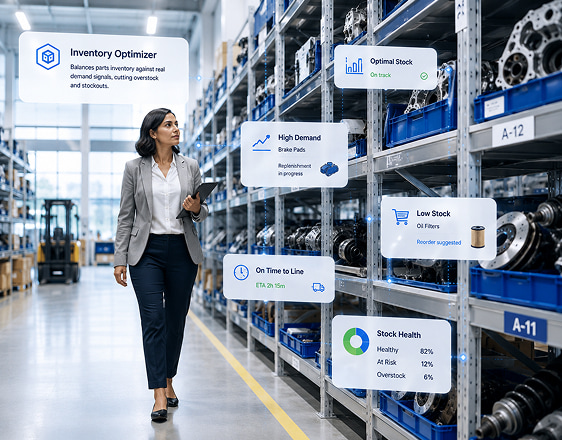
Inventory Optimizer
Balances parts inventory against real demand signals, cutting overstock and stockouts so the right components reach the line on time.

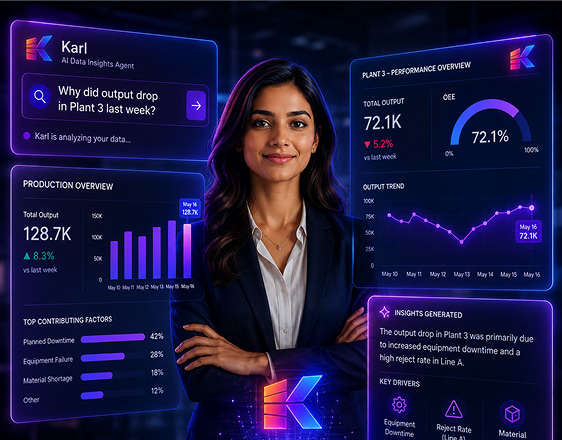
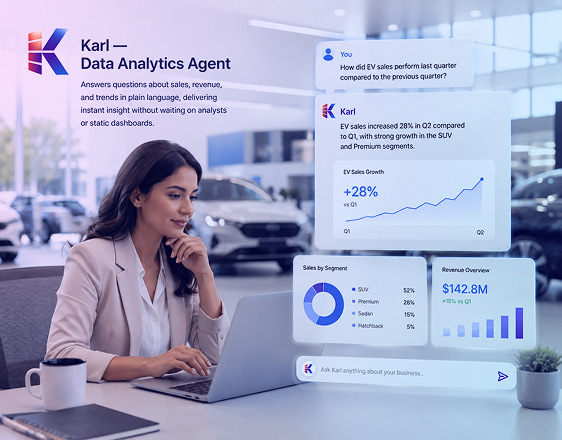
Karl — Data Analytics Agent
Answers questions about sales, revenue, and trends in plain language, delivering instant insight without waiting on analysts or static dashboards.
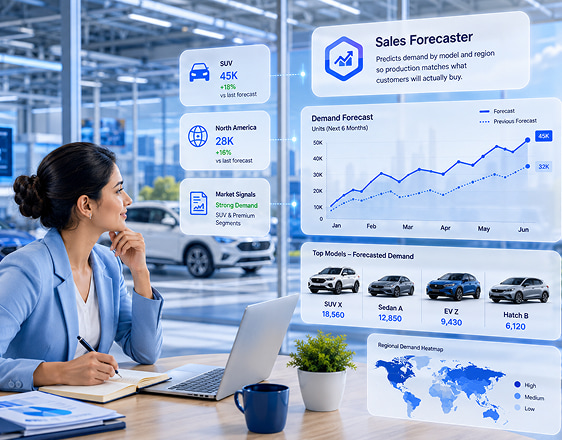
Sales Forecaster
Predicts demand by model and region from historical and market data, so production plans match what customers will actually buy.

Smart Pricing Assistant
Recommends optimal pricing from cost, demand, and competitor data, protecting margins when input costs rise faster than sticker prices climb.



End-to-End AI Services for Elevating Automotive Operations
From strategy through model development to live operations, Kanerika runs the full AI lifecycle for automotive, so pilots reach production instead of stalling there.
AI Strategy and Advisory
Define where AI creates the most value across your production, supply chain, and commercial operations

Generative AI Solutions
Automate supplier communications, compliance documentation, report generation, and knowledge retrieval.

AI Model Development
Demand, quality, maintenance, and pricing models trained on your historical production data, sensor outputs, and sales records.
AI/MLOps
Keep automotive AI models accurate as production patterns, supplier networks, and market conditions evolve over time.
AI Governance
Deploy automotive AI within your data privacy, audit, and regulatory requirements across all manufacturing sites you operate in.

AI/ML Consulting
Build demand forecasting, quality prediction, and predictive maintenance models configured for your automotive environment.

What Makes Kanerika the Right AI Partner for Automotive
High Pilot-to-Production Rate
Move AI from consulting through model development to live MLOps, so your automotive pilots reach production instead of stalling there.
Proven AI Expertise
Deploy production-ready AI solutions, from Karl for conversational analytics to inventory optimization and sales forecasting.
Automotive-Specific AI
Models trained on production data, supplier records, telematics signals, and dealer performance, not adapted from generic enterprise templates.
Responsible AI Development
Operate under ISO 27001, SOC 2, and CMMI Level 3, so AI meets the compliance bar regulated automotive work demands.
What Leading Automative Firms Say About Our AI
Our procurement team stopped chasing shortfalls and started planning ahead. After deploying the Demand Forecaster, parts availability improved significantly.
Head of Supply Chain Planning
Major Automotive OEM
VP of Manufacturing Quality
Tier 1 Automotive Supplier
Our plant managers spent shift meetings waiting on the analytics team for basic production data. Karl put that data in their hands during the meeting. The quality of decisions on the floor changed noticeably.
Head of Manufacturing Operations,
Automotive Components Manufacturer
Logistics cost was a black box. We had no real visibility into route efficiency or carrier performance. The Route Optimizer gave us that visibility and we reduced transportation costs significantly.
Director of Logistics Operations
Vehicle Distribution Network
Frequently Asked Questions (FAQs)
01How is AI used in the automotive industry?
AI in automotive applies across demand forecasting, quality inspection, predictive maintenance, supply chain optimization, logistics routing, and dealer analytics. Each use case reduces manual effort, improves decision speed, and lets automotive organizations act on data in real time. Kanerika builds and deploys these across OEMs, Tier 1 suppliers, and dealer networks.
02How does AI improve demand forecasting for automotive parts and vehicles?
AI demand forecasting models analyze historical sales data, model lifecycle patterns, seasonal variations, marketing signals, and economic indicators simultaneously — producing more accurate predictions than traditional statistical methods. These forecasts feed directly into procurement and production planning workflows, reducing parts shortages and excess inventory across the network.
03How does AI-powered quality inspection work in automotive manufacturing?
Computer vision models inspect components at assembly line speed, detecting surface defects, dimensional errors, weld integrity issues, and paint quality inconsistencies in real time. AI-based inspection systems detect defects with significantly higher accuracy than manual checks, flagging issues before they move to the next production stage. This reduces rework costs, warranty claim rates, and recall risk.
04What is predictive maintenance in automotive and how does AI enable it?
Predictive maintenance uses sensor data from production equipment and fleet assets to forecast likely failures before they occur. ML models trained on equipment telemetry, maintenance history, and operational parameters identify patterns that precede breakdowns, giving maintenance teams time to act before a stoppage hits. This shifts operations from reactive to scheduled intervention, reducing unplanned downtime and the costs that come with it.
05What are the benefits of AI in automotive manufacturing?
AI in automotive manufacturing lowers unplanned downtime through predictive maintenance, catches defects earlier with computer vision inspection, and balances inventory against real demand. Plants run closer to full capacity, warranty claims drop, and margins hold even when input costs climb. Machine learning also surfaces production issues from plant data before they spread, so smart manufacturing decisions happen faster and with less guesswork.
06How is AI used in automotive supply chain and demand forecasting?
AI improves automotive supply chain optimization by predicting demand from historical sales, market signals, and seasonality, then aligning inventory and production to it. Forecasting models cut both overstock and parts shortages, so the right components reach the line on time. Machine learning also flags supplier risk early, giving planners time to reroute orders before a late shipment stalls production across OEM and supplier networks.
07How can automotive companies deploy AI securely and get to production?
Many automotive AI projects stall between a promising pilot and reliable production. Reaching production takes AI/ML consulting to choose the right use cases, model development grounded in your own data, and MLOps to keep models accurate once live. Strong data governance, role-based access, and audit trails matter most in regulated automotive work. Kanerika builds and governs that full path so automotive AI reaches production safely.
08How does AI improve pricing and margins in the automotive industry?
AI protects automotive margins by setting prices from cost, demand, competitor moves, and inventory levels rather than fixed rules. Machine learning models recommend pricing for vehicles, parts, and service, adjusting as conditions shift. Sales forecasting predicts demand by model and region, so production and pricing line up with what buyers will actually purchase. Together they hold margins when input costs rise faster than sticker prices.